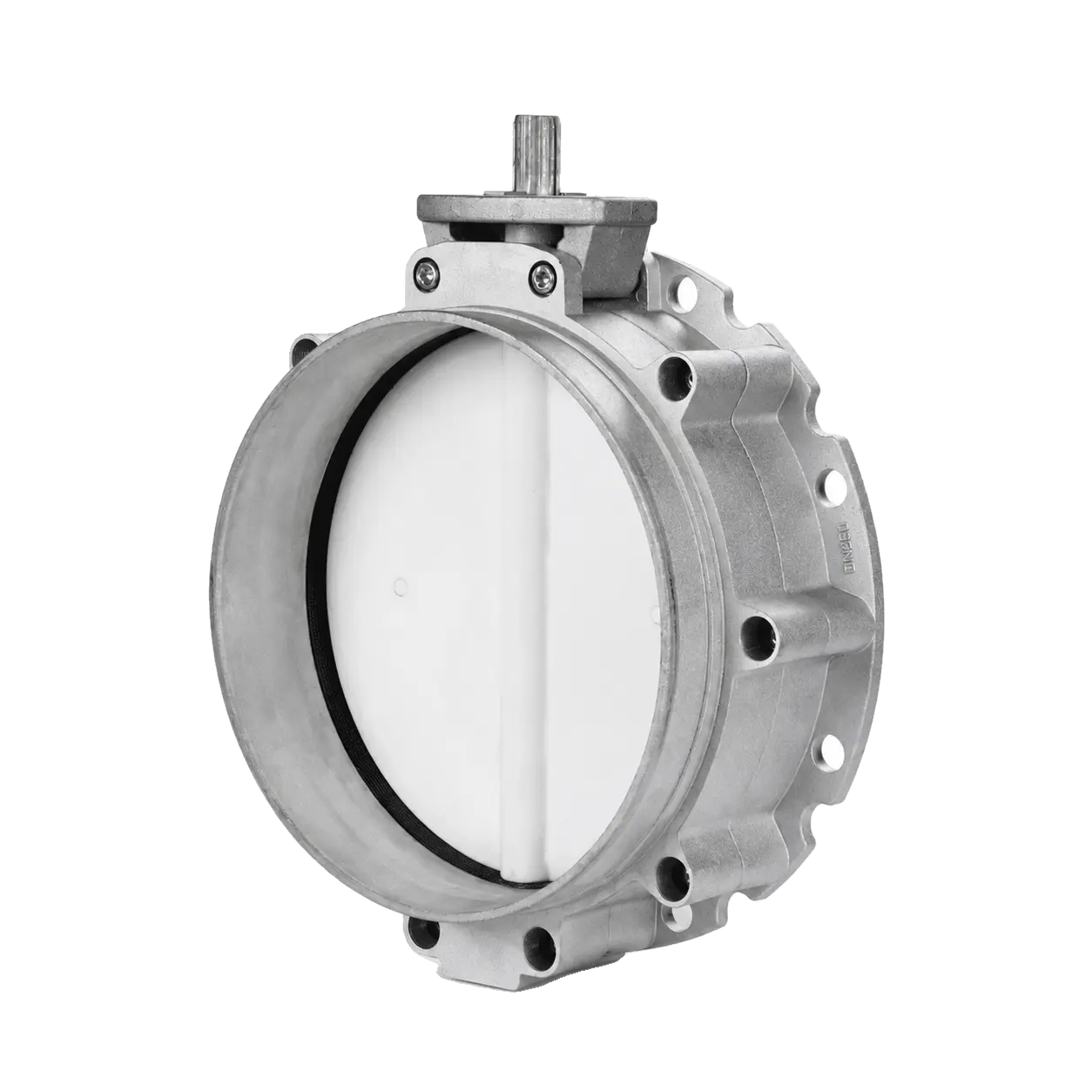
Butterfly Valve
Controls the material path at a silo, hopper or transfer connection.
Installation area · Silo or hopper outletTechnical page & enquiry
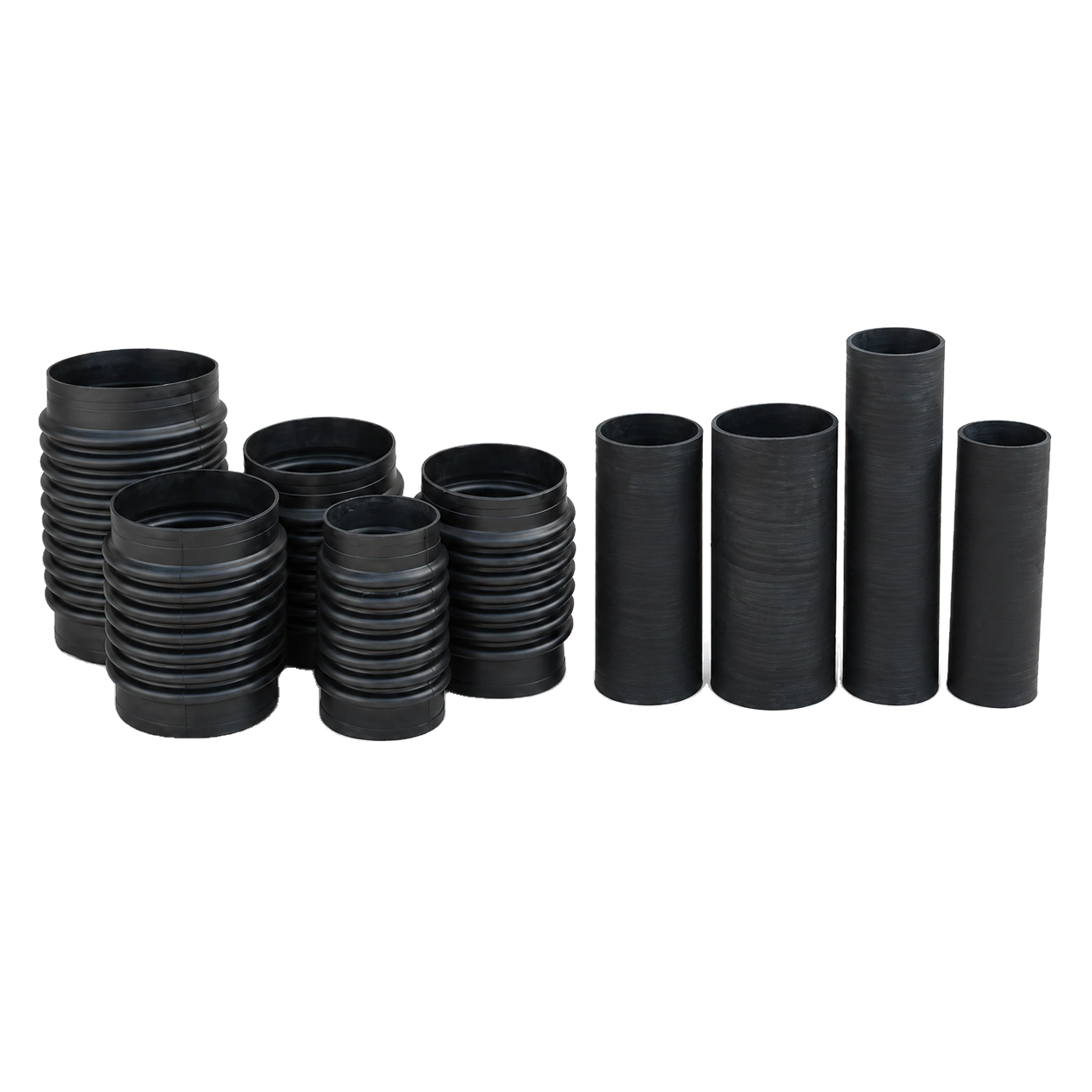
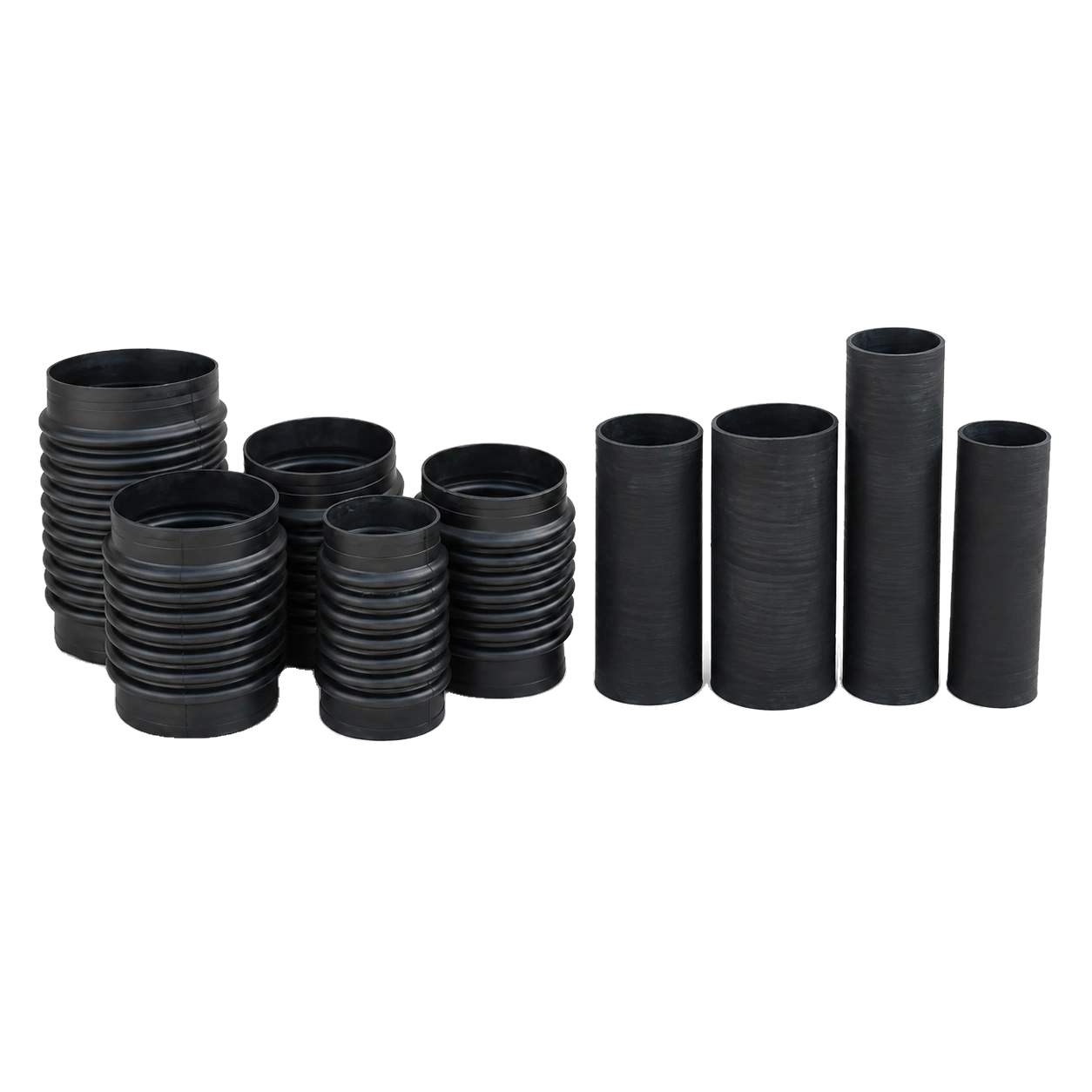
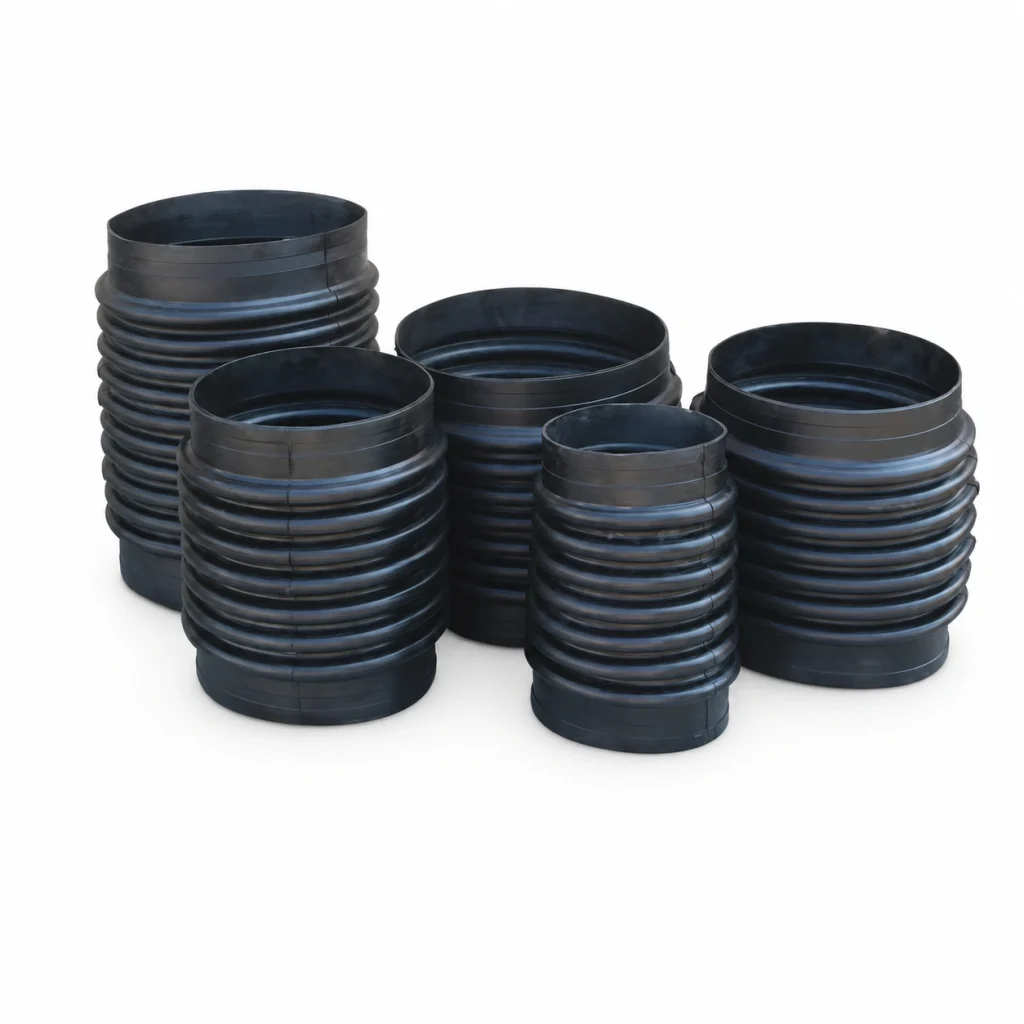
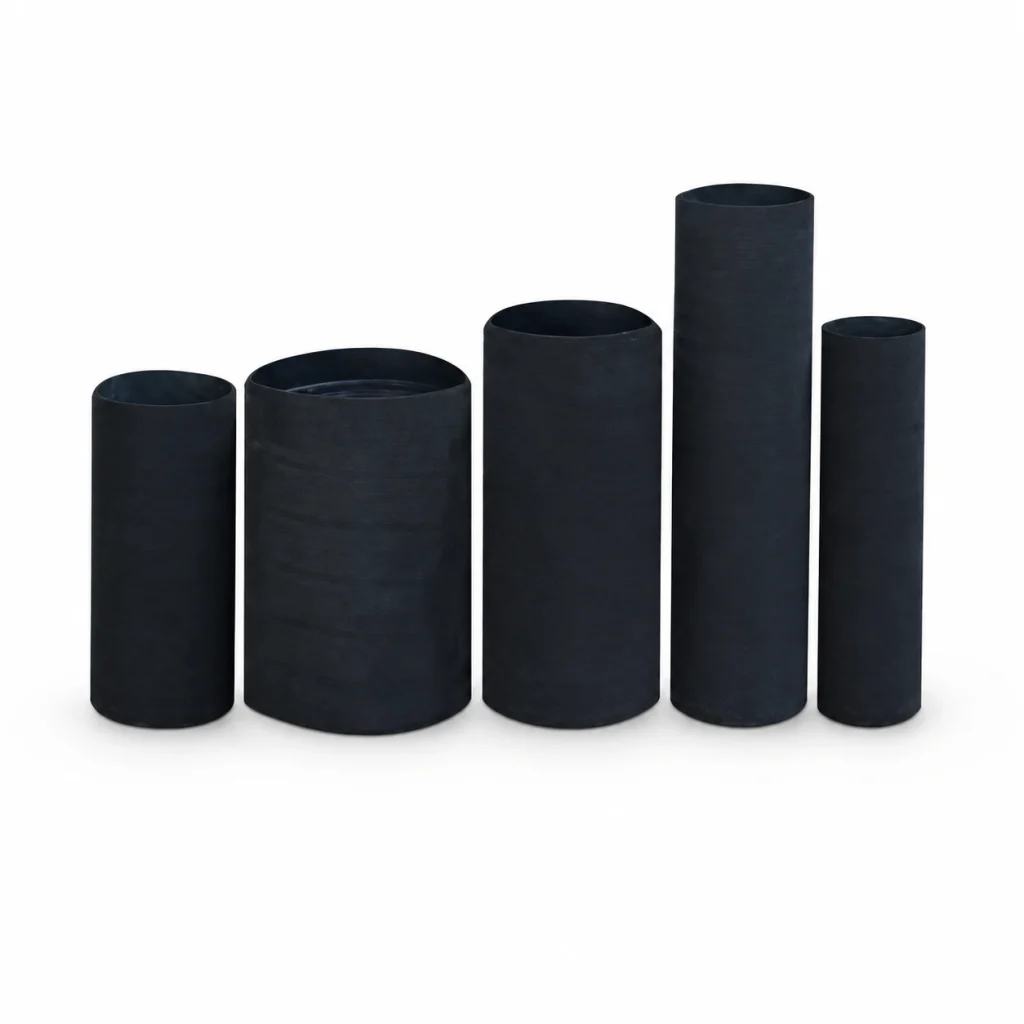
eQUIP manufactures rubber discharge sleeves for flexible, abrasion-resistant and dust-reducing connections at material discharge points. These sleeves are designed for screw conveyor outlets, flap valves, slide gates, hopper outlets, silo discharge points and transfer equipment used in bulk material handling systems.
Final configuration and suitability require a technical review of your material and operating conditions.
A rubber discharge sleeve helps guide material from the equipment outlet to the next process point while reducing dust leakage, spillage, vibration transfer and impact at the discharge area. Its flexible rubber structure allows easier alignment between connected equipment and helps protect the outlet zone against wear caused by abrasive powders, granules or bulk solids.
Depending on the application, the sleeve can be supplied with round or square collars, clamp rings, bolt-on flange connections, fabric reinforcement, wear-resistant rubber compounds and anti-static rubber options. Dimensions, connection details and rubber specifications can be adapted according to the existing equipment and project requirements.
A rubber discharge sleeve is installed at the outlet of equipment such as screw conveyors, flap valves, slide gates, hoppers or silos. It creates a flexible transition between the discharge point and the receiving equipment, helping material flow in a more controlled way.
The sleeve helps reduce material spillage, dust escape and direct impact at the outlet. It is especially useful where minor misalignment, vibration, abrasive materials or frequent discharge operations may cause wear or leakage.
Where it is used
The general catalogue is public. Order-specific drawings and datasheets are available only through an authorized account.
Browse the public e-catalogueOnly documents assigned to your account for a specific order and equipment are available here. Membership approval alone does not grant document access.
My orders and documentsHow to select
The design of a rubber discharge sleeve depends on the outlet size, connection type, material characteristics, drop height, flow rate, abrasion level and operating environment. eQUIP can configure the sleeve diameter, length, rubber compound, reinforcement type, collar design and flange connection according to the project.
The sleeve can be used with cement, fly ash, lime, mineral powders, aggregates, granules and similar bulk materials. For dust-sensitive or classified areas, anti-static or conductive rubber options can be considered according to project requirements.
Request a quotation
Final configuration and suitability require a technical review of your material and operating conditions.
Questions buyers ask
A rubber discharge sleeve is a flexible rubber connection installed at the outlet of equipment such as screw conveyors, valves, hoppers or silos. It helps guide material flow while reducing dust leakage, spillage and wear at the discharge point.
It is commonly used at screw conveyor outlets, flap valves, slide gates, hopper outlets, silo discharge points, bagging systems and transfer points in bulk material handling plants.
No. A rubber discharge sleeve is normally installed at the outlet of equipment such as conveyors, valves or hoppers. A loading bellow is generally used for truck, tanker or container loading applications. These are different products with different functions.
Rubber provides flexibility, abrasion resistance and impact absorption. It helps compensate for minor misalignment, reduces noise and vibration transfer, and protects the discharge area against wear.
Yes. The diameter, length, rubber compound, reinforcement, collar type, clamp ring or flange connection can be customized according to the existing equipment and project requirements.
The price depends on sleeve diameter, length, rubber type, reinforcement, connection design, wear resistance level, anti-static requirements and project-specific dimensions.
Complete your selection
Explore related components and replacement parts. Final selection depends on the model, connections and operating conditions.
Controls the material path at a silo, hopper or transfer connection.
Installation area · Silo or hopper outletTechnical page & enquiry
Provides pneumatic operation of the selected valve assembly.
Installation area · Valve actuationTechnical page & enquiry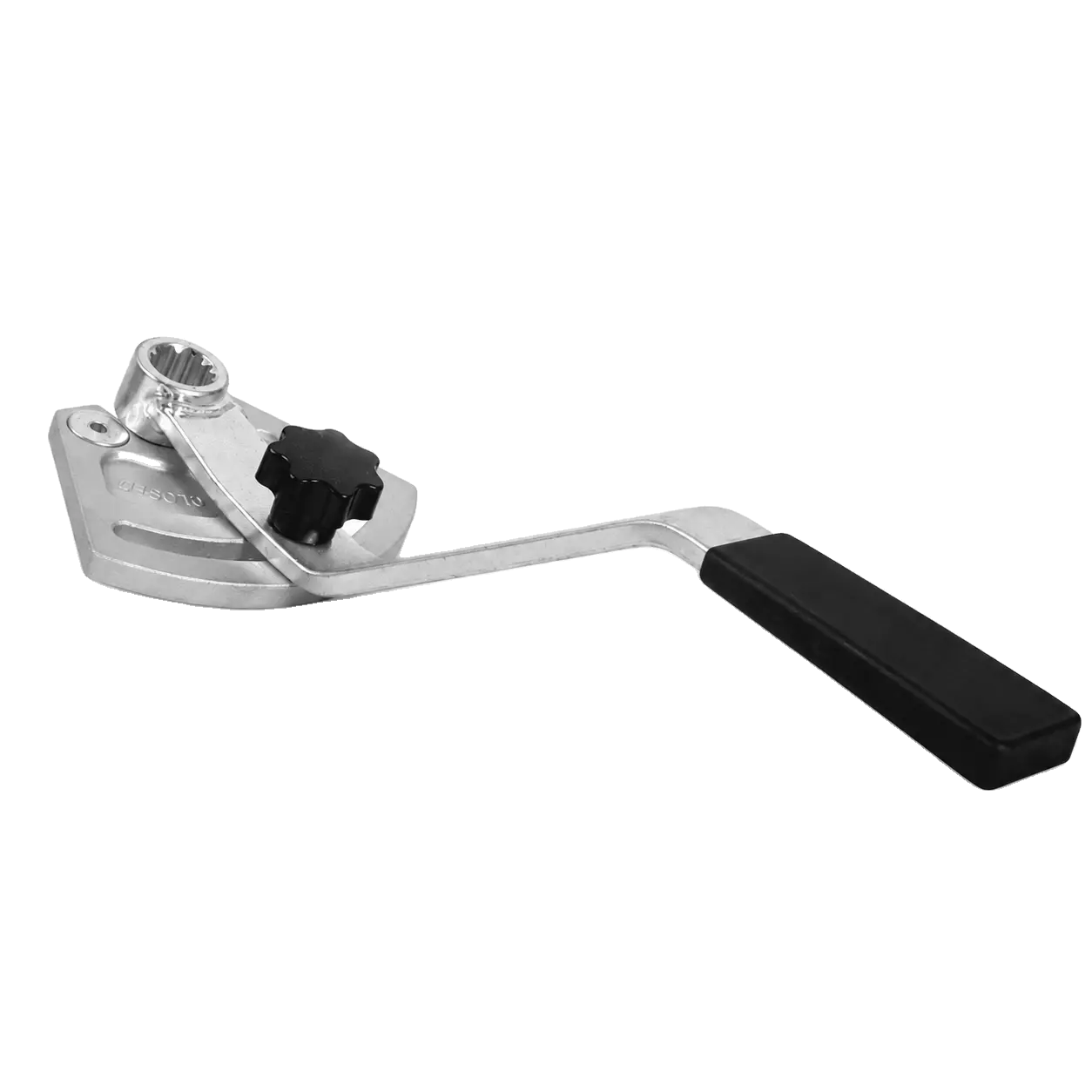
Provides manual operation where local valve control is needed.
Installation area · Valve actuationTechnical page & enquiry


