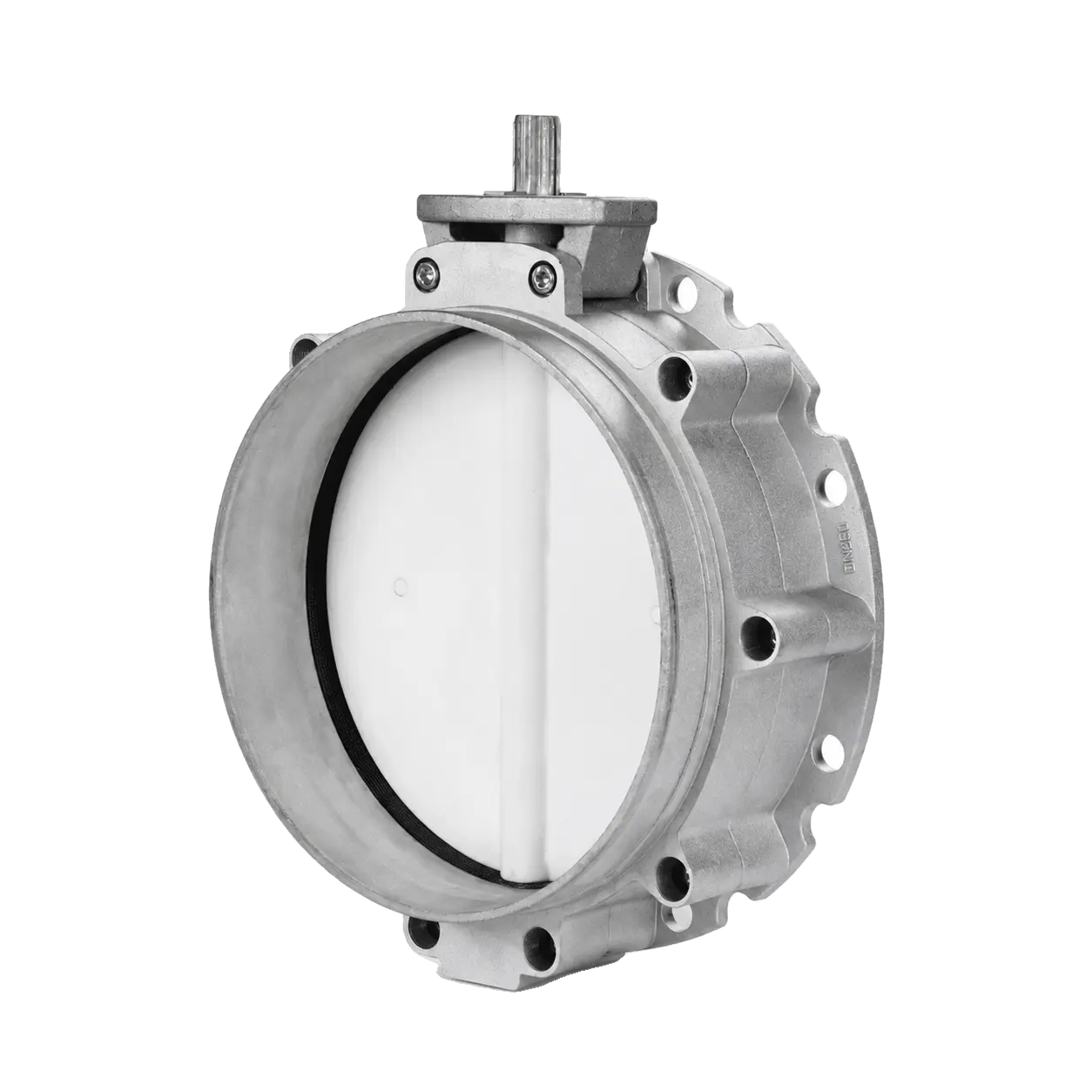
Butterfly Valve
Controls the material path at a silo, hopper or transfer connection.
Installation area · Silo or hopper outletTechnical page & enquiry

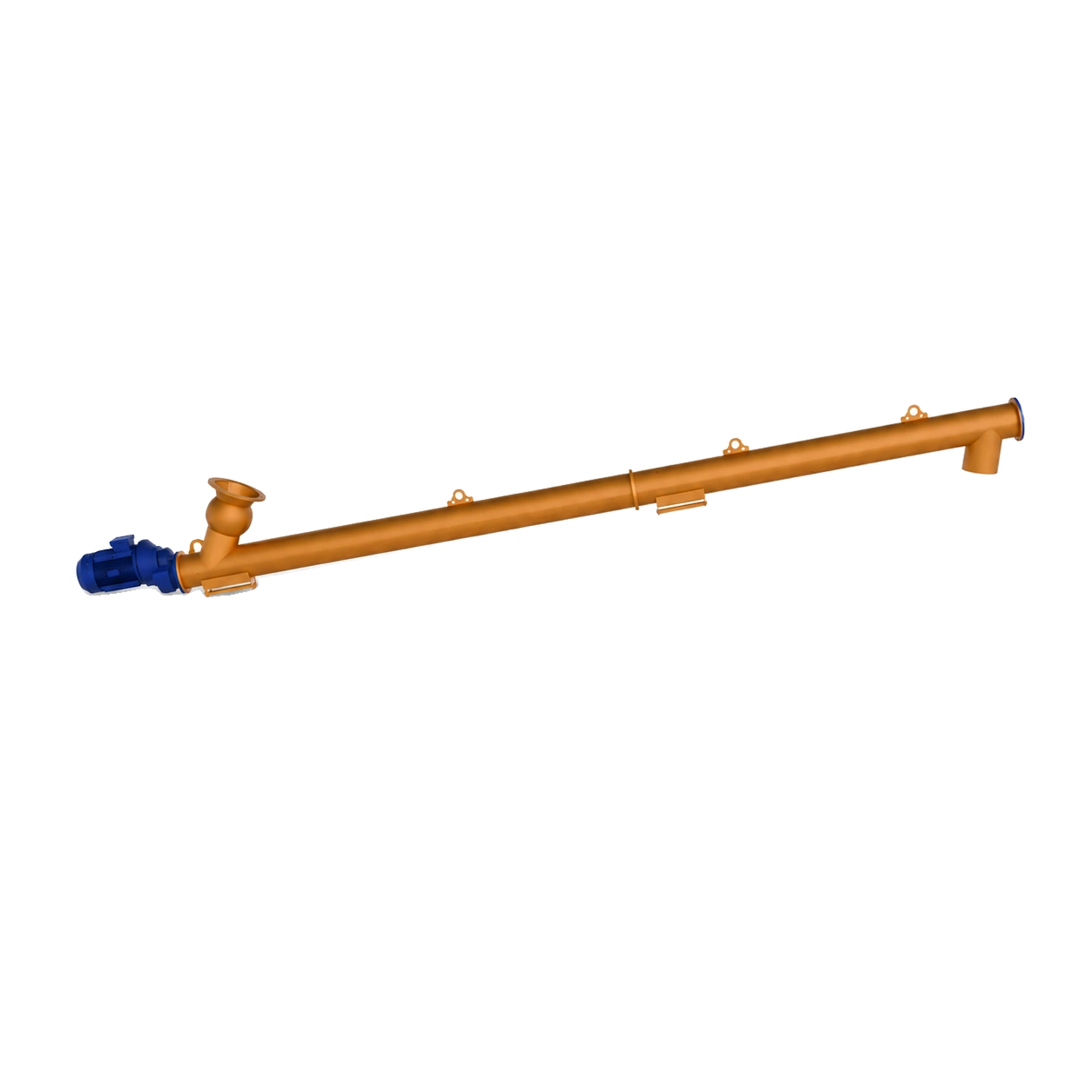
Right-drag to move the model. Drag to rotate. Use the mouse wheel or two fingers to zoom. This model illustrates the product, not a confirmed order configuration.
Cement screw conveyors for silo discharge and batching plant feeding. Compare capacity, length and inclination requirements and request a project quotation.
Final configuration and suitability require a technical review of your material and operating conditions.
eQUIP manufactures cement screw conveyors for enclosed transfer from silo outlets to weigh hoppers, mixers and loading equipment. The conveyor configuration is selected for your material, required throughput and installation layout.
Each cement screw conveyor can be supplied as a tubular screw conveyor or U-trough screw conveyor according to the application, required capacity, conveying distance, installation angle and plant layout. Inlet and outlet configurations, flange dimensions, drive options, screw geometry and material selections can be adapted to project requirements.
For cement plants and concrete production facilities, the conveyor can also operate as a cement screw feeder, providing steady material flow from silo discharge points to weighing, mixing, packing or loading equipment.
A cement screw conveyor transfers dry bulk powders from silo outlets to process equipment in an enclosed and controlled way. It helps move cement, fly ash, lime and similar materials to weigh hoppers, mixers, bagging units or loading points while reducing dust leakage and supporting stable plant operation.
Workshop & application
Where it is used
Cement and concrete: feeding weigh hoppers and mixers from storage silos. Define the required throughput and the route between the silo outlet and the receiving equipment. Cement and concrete applications.
Mining and mineral powders: conveying materials such as lime and fly ash. Material properties and installation angle must be considered when selecting the conveyor. Mining and mineral powder applications.
The general catalogue is public. Order-specific drawings and datasheets are available only through an authorized account.
Browse the public e-catalogueOnly documents assigned to your account for a specific order and equipment are available here. Membership approval alone does not grant document access.
My orders and documentsHow to select
A cement screw conveyor, also called a cement auger, must be selected for the complete conveying route. The same screw diameter will not deliver the same output at every inclination or with every powder. Establish the required mass flow and bulk density before choosing diameter, speed and drive.
The design of a cement screw conveyor depends on the required capacity, conveying distance, installation angle, material characteristics and site conditions. eQUIP can configure the conveyor diameter, screw pitch, inlet and outlet position, drive arrangement and material selection according to project requirements.
| Feature | Options |
|---|---|
| Conveyor Type | Tubular Screw Conveyor / U-Trough Screw Conveyor |
| Material Handled | Cement, fly ash, lime, dry powders |
| Application | Cement silo discharge, batching plants, mixers |
| Installation | Horizontal or inclined installation |
| Inlet & Outlet | Project-specific configuration |
| Drive Unit | Gear motor options |
| Manufacturing | Project-specific length, diameter and capacity |
Need to estimate conveying capacity? Use our Screw Conveyor Capacity Calculator to calculate approximate capacity based on screw diameter, pitch, speed, filling ratio and material density.
Request a quotation
Send a layout drawing or photographs and the installation country with these details. The final configuration and supply scope will be confirmed in the quotation.
Questions buyers ask
A cement screw conveyor is an enclosed conveying system used to transfer cement and similar dry powders from silos to weigh hoppers, mixers, packing units or loading points.
It is commonly used in cement silos, concrete batching plants, cement plants, dry mortar lines and industrial powder handling systems.
Yes. In many applications, a cement screw conveyor also works as a cement screw feeder by providing controlled material flow from the silo outlet to process equipment.
Capacity depends on screw diameter, pitch, speed, filling ratio, material density and installation angle. For preliminary estimation, the Screw Conveyor Capacity Calculator can be used.
The price depends on conveyor length, diameter, screw type, material selection, drive unit, inlet and outlet design, surface treatment and project-specific requirements.
Complete your selection
Explore related components and replacement parts. Final selection depends on the model, connections and operating conditions.

Welded silos up to 100 tonnes for your cement storage project. Share your material, required capacity and destination so we can assess…
Technical page & enquiry
U-trough screw conveyors with removable covers for powders and granules. Compare maintenance access, throughput and layout, and request a project quotation.
Technical page & enquiry
Silo top filters for cement and powder silo venting. Review airflow, pulse cleaning and mounting requirements, then request a filter quotation.
Technical page & enquiryFROM OUR PHOTO ARCHIVE
Photographs from our archive showing this equipment.

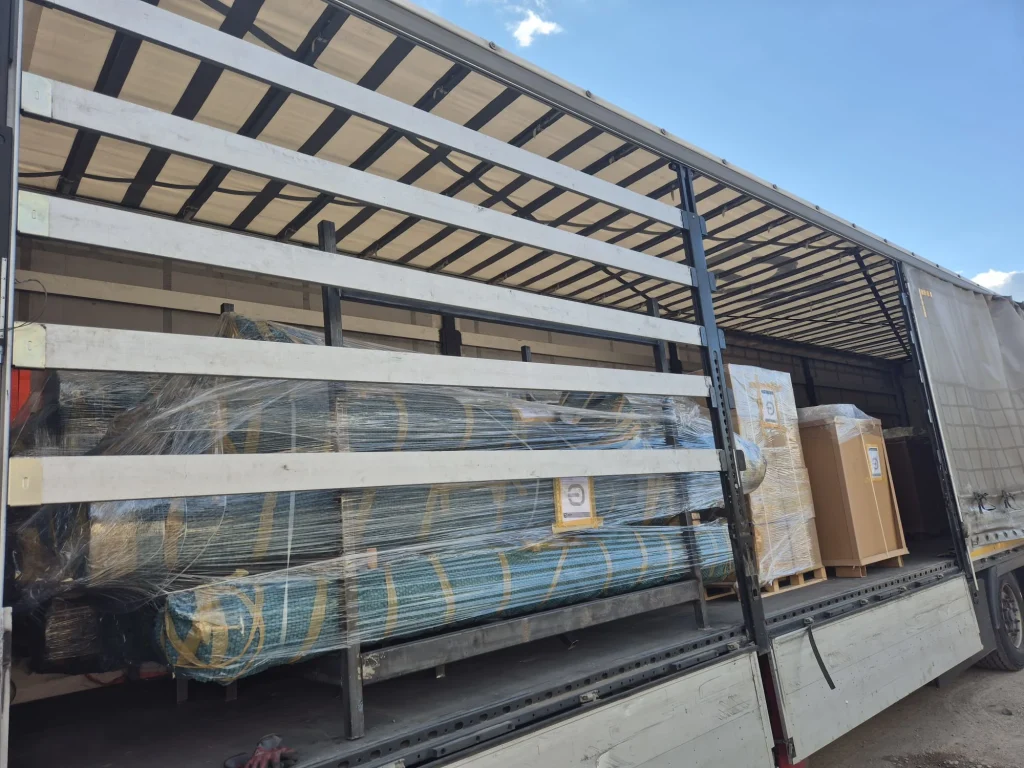
Shipment
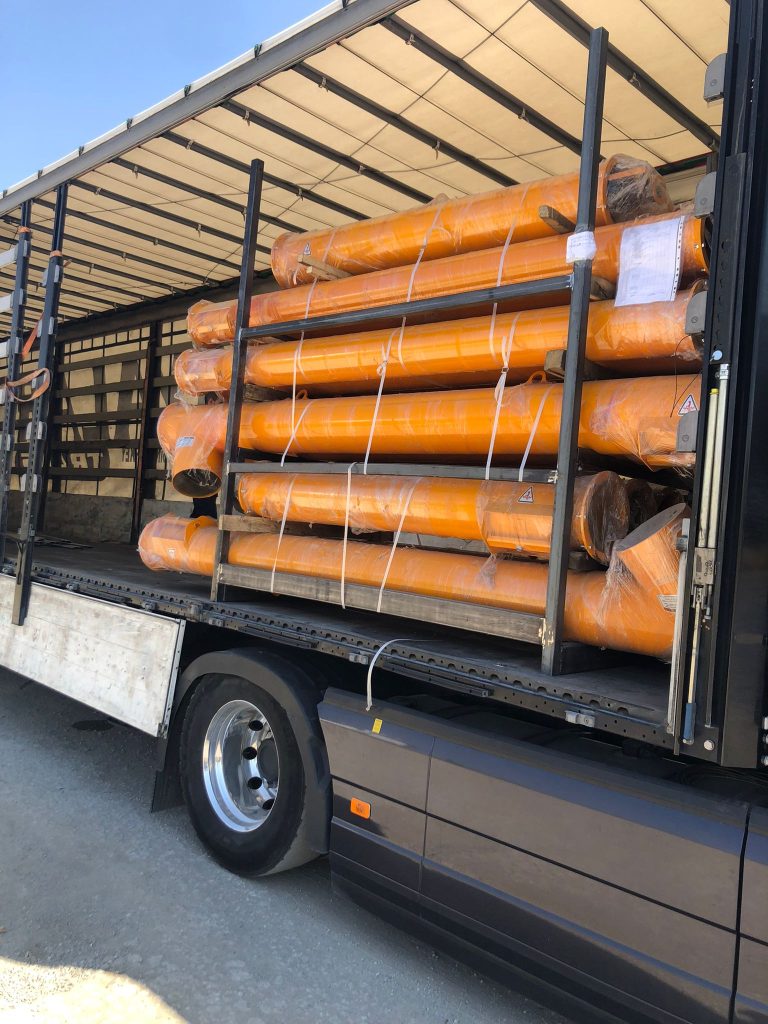
Wrapped screw conveyors and packaged equipment loaded on a truck.
View photographs →No photographs match this selection.
Shipment
Wrapped screw conveyors and packaged equipment loaded on a truck.
Related solution: Choosing a screw conveyor starts with the material →
Discuss a similar requirement →