Chemical powders and granules differ in corrosion behaviour, moisture sensitivity and handling properties. A clear material specification helps determine contact materials, seals, transfer arrangements and the appropriate level of containment.
From receiving to the process
Material information first
Provide the safety data sheet and operating conditions. Record corrosiveness, moisture sensitivity and temperature, and identify any requirements for static control or hazardous-area equipment in the project specification.
Storage and discharge
Assess silo or hopper geometry, storage time and the symptoms of interrupted flow. Flow aids, shut-off valves and feeders perform different duties; choose them around the material and the downstream process.
Transfer and dust handling
Define the required throughput, transfer route and receiving equipment. Review dust capture at each release point and the filter media and cleaning method alongside material compatibility.
Common powder-handling problems in chemical plants
Powder cakes during storage
Compare storage duration, humidity and temperature with the conditions under which discharge was reliable. Check the hopper outlet and material flow properties before adding vibration or changing the feeder.
Dust escapes at a transfer point
Identify the release point, operating phase and receiving pressure. Define the containment requirement for the actual substance; visible dust alone is not a measure of operator exposure.
Feed rate changes between batches
Record bulk density, moisture and hopper level alongside the feed setting. For mass-based recipes, assess weighing and control requirements instead of assuming that constant speed gives constant mass flow.
Equipment to discuss
Explore these equipment families as starting points for a project discussion. The final configuration depends on your material, layout and operating requirements.
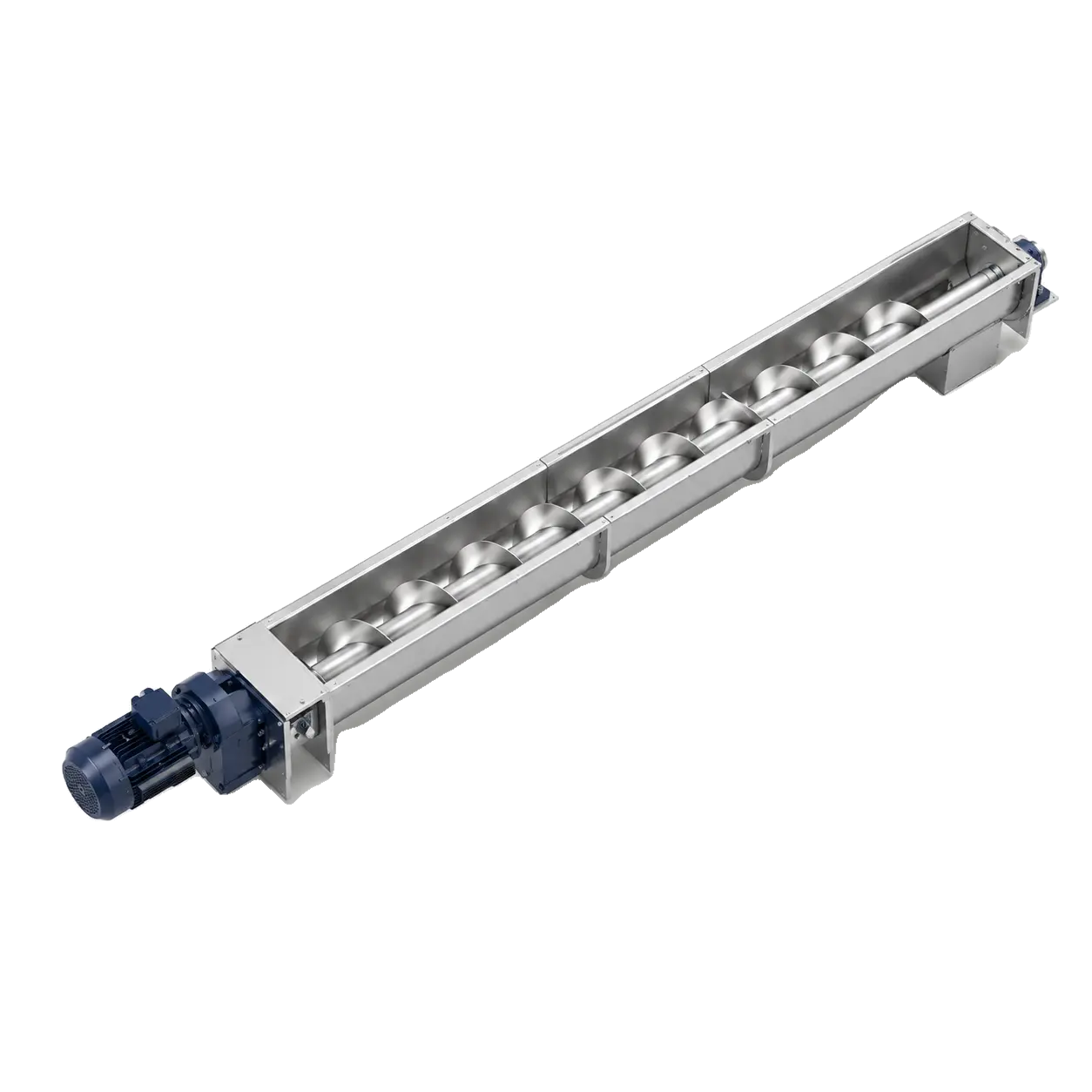
- Stainless Steel Screw Conveyor — For enclosed powder transfer after checking the selected metal grade, seals and operating conditions against the material.
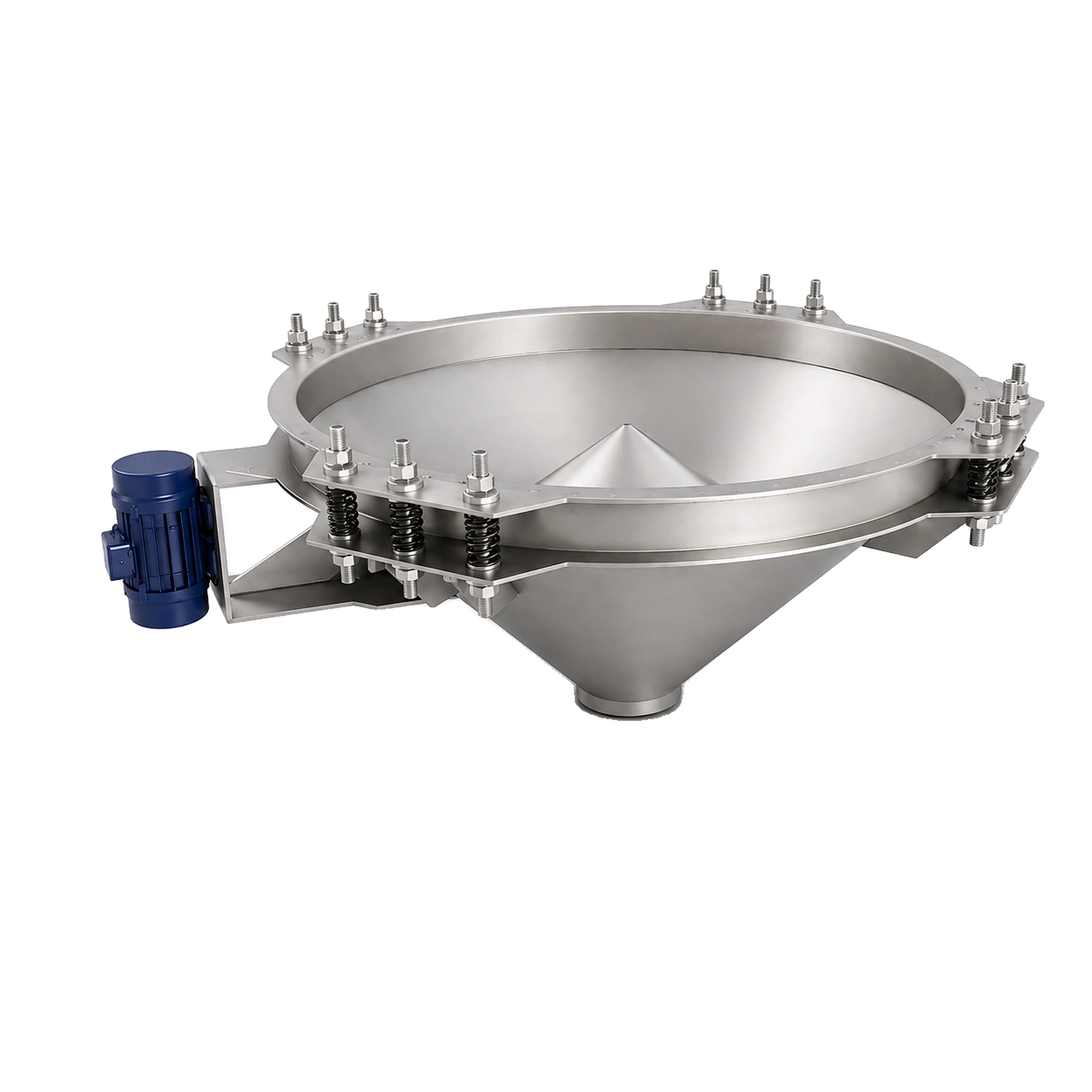
- Bin Activator — For assessing discharge assistance beneath a silo or hopper; selection depends on flow behaviour and the supporting structure.
- Rotary Valve — For volumetric feeding or an airlock duty within its specified pressure limits; do not assume explosion isolation.
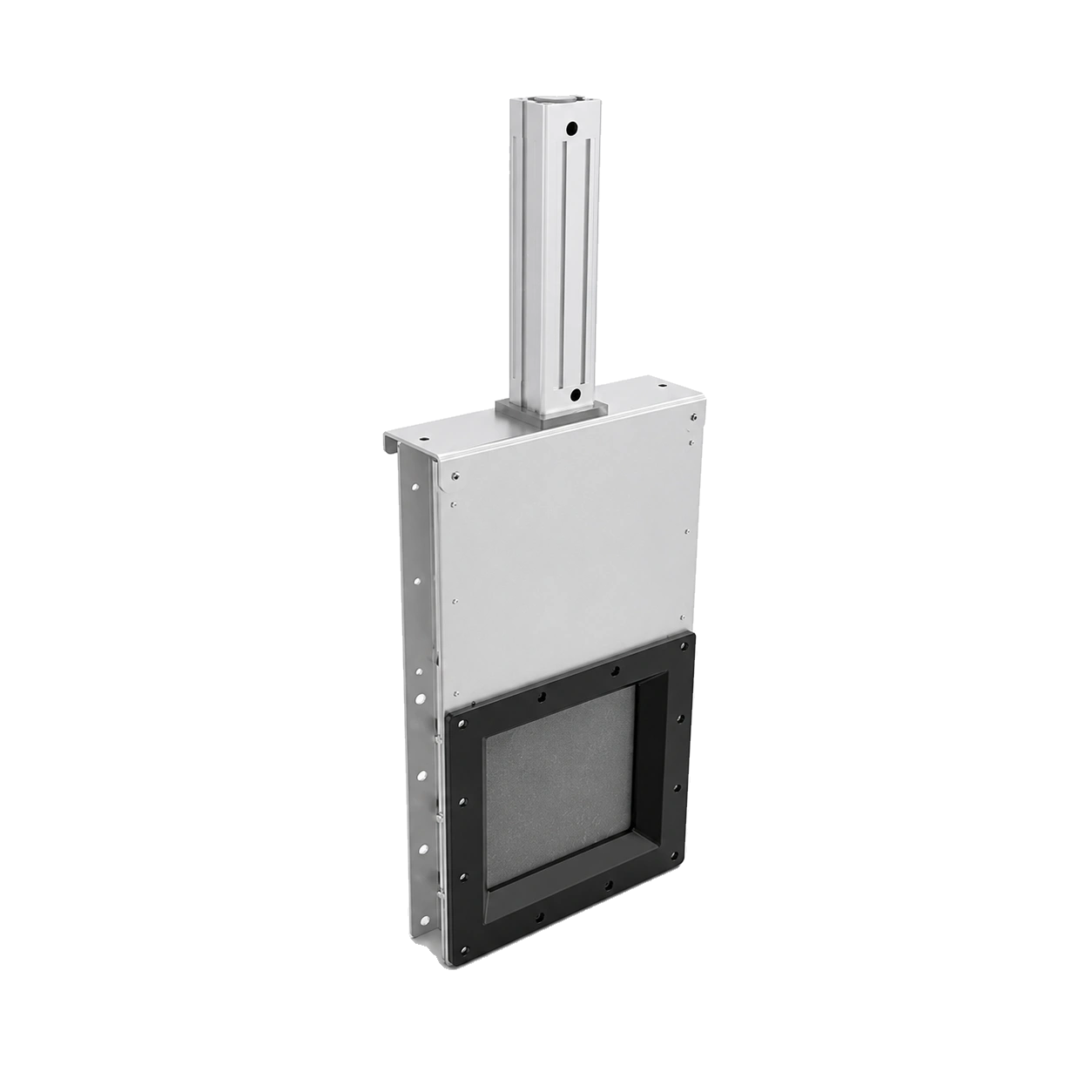
- Slide Gate Valve — For material shut-off; required leakage performance, pressure and operating frequency must be specified.
Prepare your project enquiry
- Material name and safety data sheet.
- bulk density and particle size.
- moisture and temperature.
- compatibility requirements.
- containment objective.
- throughput and duty cycle.
- site classification and layout.
Include a drawing or photographs of the installation points and the destination equipment.
Guides for your process
- Choosing a screw conveyor starts with the material
- When a silo will not discharge consistently
- Rotary valve, slide gate or diverter: three different jobs
Frequently asked questions
Does stainless steel resolve every chemical compatibility requirement?
No. Compatibility depends on the chemical, concentration, temperature, moisture and cleaning conditions. The material grade and every contacting seal or component must be reviewed for the stated duty.
Can new equipment be fitted into an existing chemical process?
Start with flange dimensions, available height, access and the receiving equipment. Include the safety data sheet, cleaning method, pressure and temperature range, and any site equipment specification. These define the interfaces to review before confirming a replacement.
Discuss your application
Request an equipment discussion for your material and plant layout.
Industry reference photograph; not an eQUIP installation. Eastman Chemical plant, Kingsport — Tennessee Valley Authority · CC BY 2.0. Resized and cropped for display.