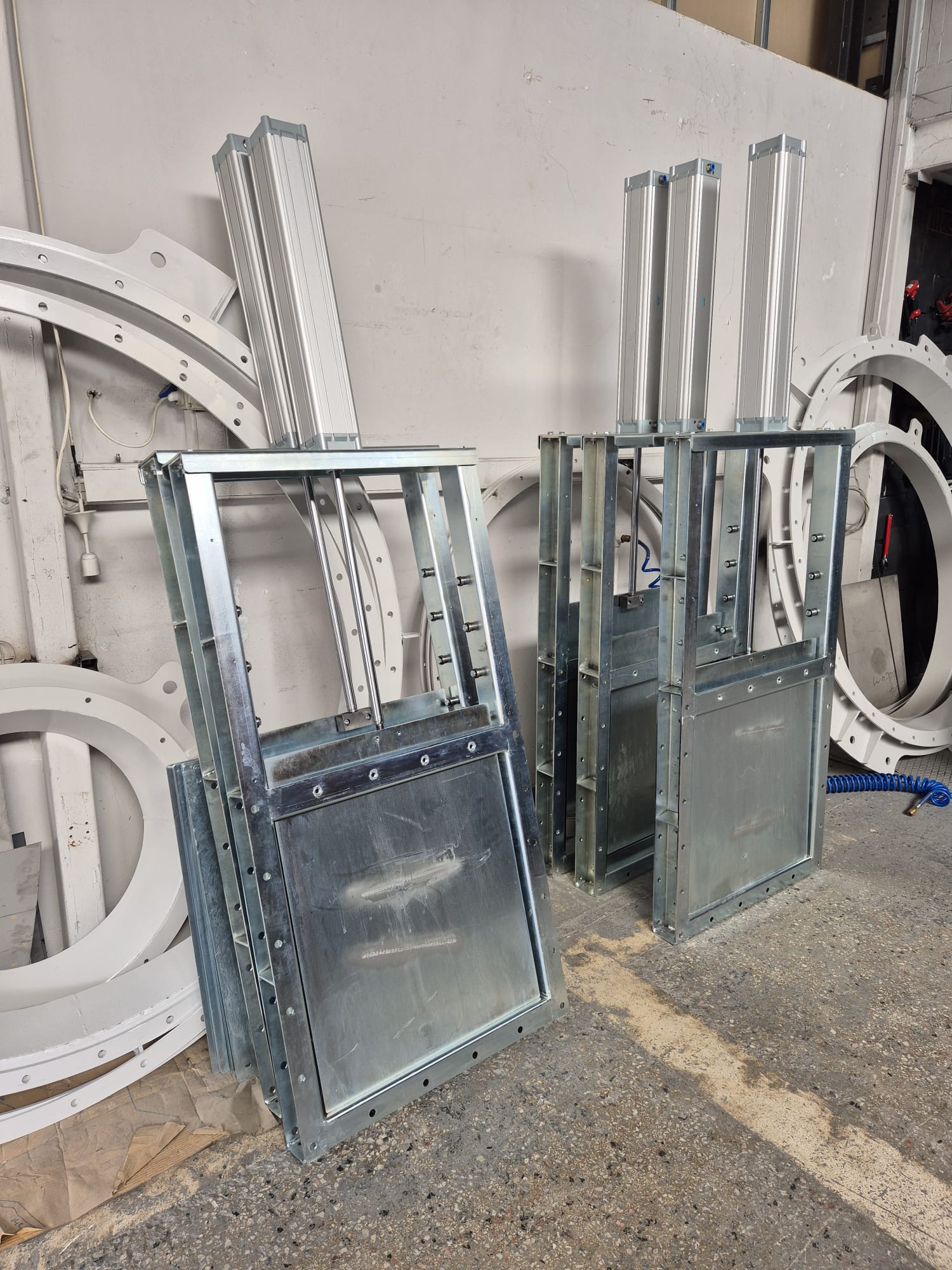
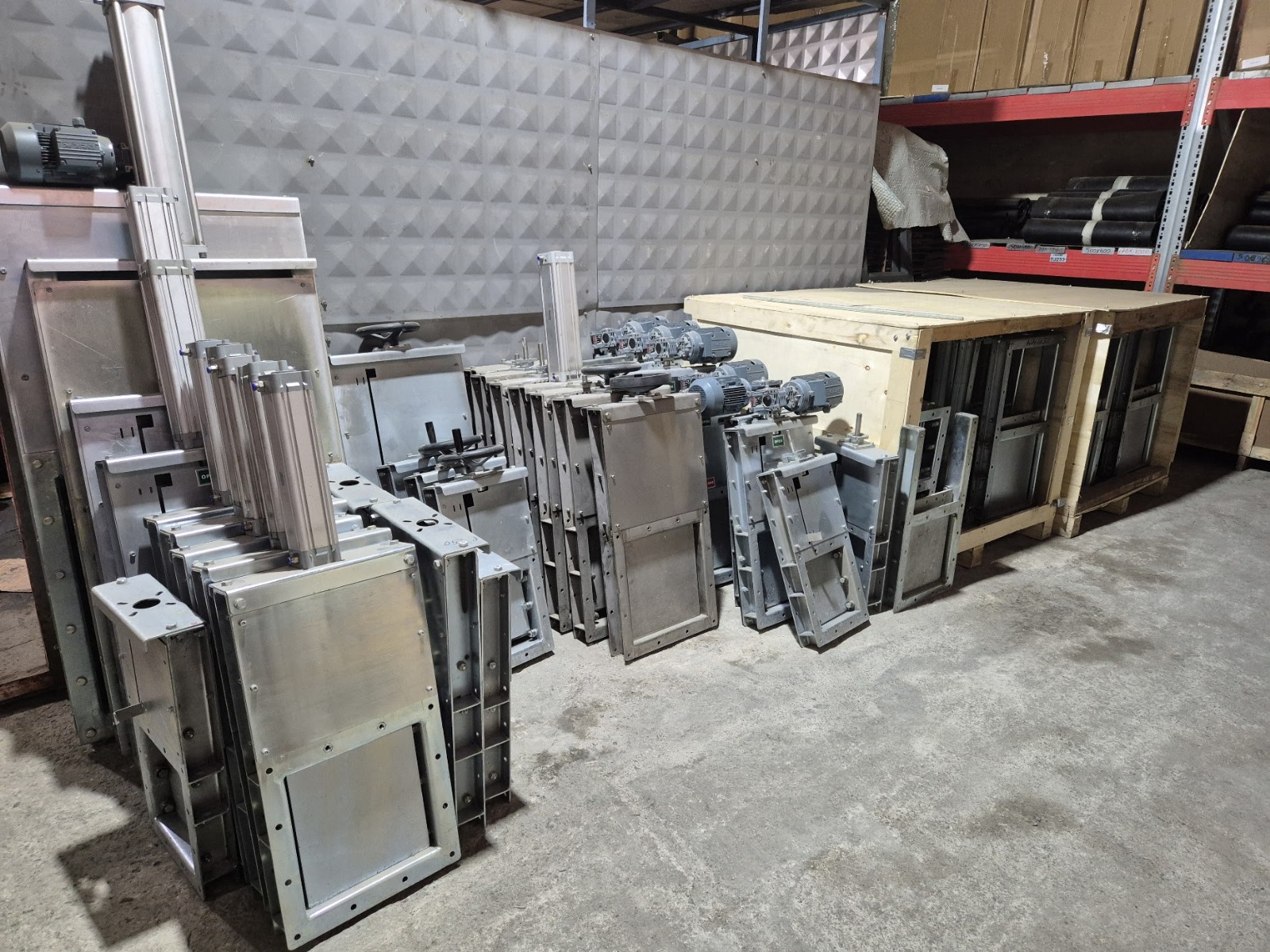
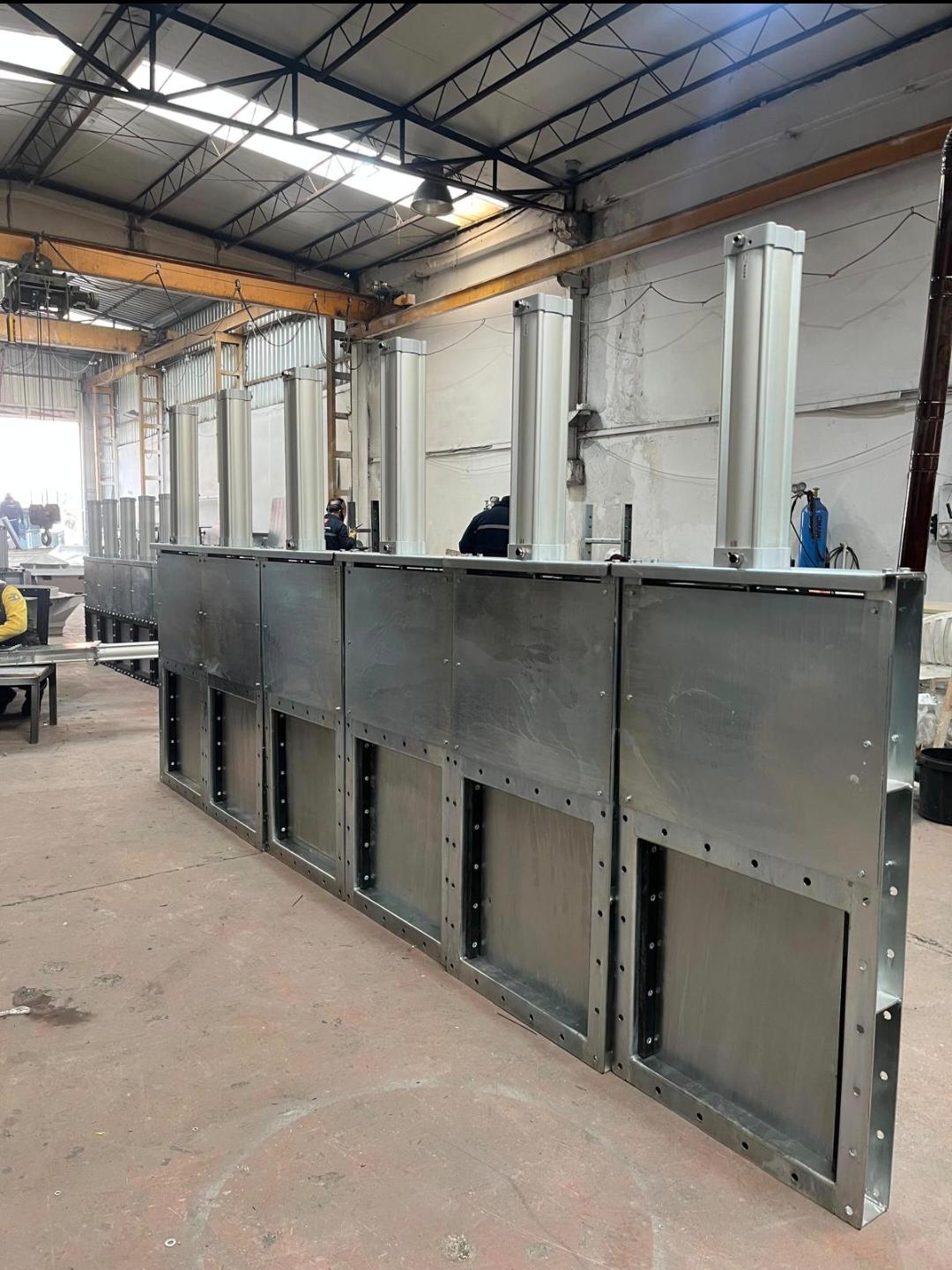
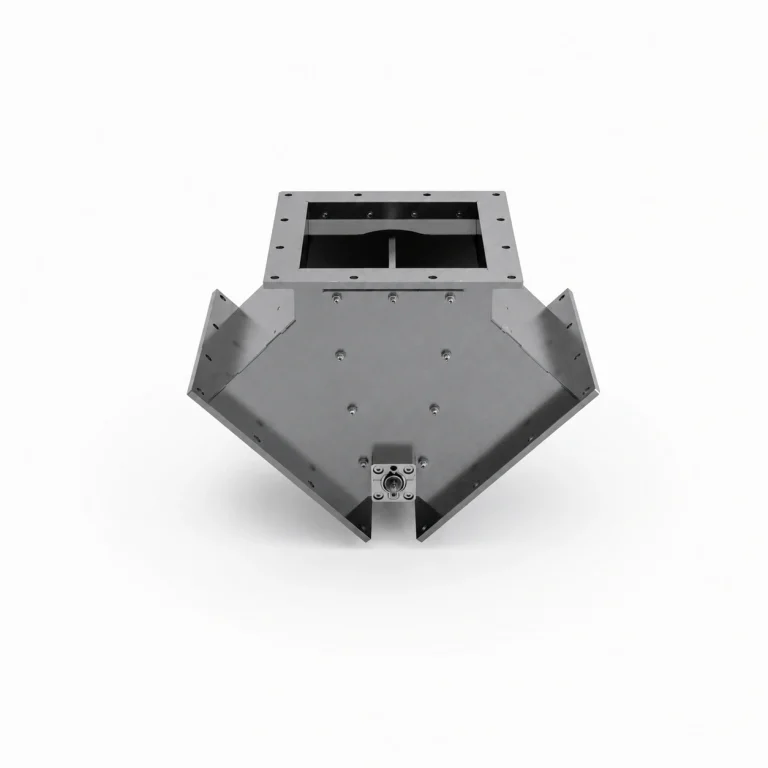
Slide gate valve is a dry bulk material shut-off valve used under silos, hoppers, bunkers, chutes and conveyor connection points. eQUIP supplies sliding gate solutions for cement plants, concrete batching plants, powder handling systems, dry mortar plants, aggregate lines and industrial bulk material handling facilities.
This valve uses a sliding plate to control the material passage. When the plate moves into the flow path, the outlet closes and material discharge stops. When the plate is retracted, material can flow through the opening. This robust design is suitable for dry powders, granules and bulk materials such as cement, fly ash, lime, mineral powders, sand and aggregates.
Depending on the application, the unit can be supplied with manual, pneumatic or electric actuation. The design can be configured according to material type, flow rate, outlet size, installation position, sealing requirement, actuator type and plant layout.
What Is a Slide Gate Valve?
A slide gate valve provides material flow shut-off in dry bulk handling systems. It is commonly installed under silos, hoppers, bins and bunkers, or at screw conveyor inlets and outlets, to control whether material can pass through a discharge point.
In cement and powder handling systems, this type of slide valve can be used before screw conveyors, rotary valves, loading equipment, weighing systems or other downstream process equipment. It helps isolate the material flow for operation, maintenance, cleaning or emergency shut-off.
Key Benefits
- Dry bulk material shut-off for silos, hoppers and bunkers
- Suitable for cement, fly ash, lime, powders, granules, sand and aggregates
- Sliding plate design for simple open-close control
- Manual, pneumatic or electric actuation options
- Suitable for silo discharge and hopper outlet applications
- Helps isolate material flow before conveyors or process equipment
- Robust construction for industrial bulk material handling
- Custom inlet, outlet and flange configurations available
- Sealing options for powder handling and dust control applications
- Can be integrated with automation systems depending on actuator type
Technical Flexibility
The selection of a slide gate valve depends on material characteristics, outlet size, required flow rate, installation position, operating frequency, sealing requirement and actuation method. eQUIP can configure sliding gate valves for silo outlets, hopper discharge points, screw conveyor connections, loading systems and industrial transfer lines.
For powder materials such as cement, fly ash and lime, sealing and dust control are important design considerations. For granular materials such as sand, aggregates or mineral products, the valve body, sliding plate and guide system should be selected according to material load and abrasion conditions. Pneumatic or electric actuation can be used when remote operation or automation is required.
Optional Configurations
- Manual slide gate
- Pneumatic slide gate
- Electric slide gate
- Carbon steel or stainless steel construction
- Custom inlet and outlet flanges
- Square or rectangular opening options
- Sealing options for powder applications
- Sliding plate and guide system according to material type
- Position indication options
- Control panel or PLC connection with automated versions
- Configurations for silo, hopper and conveyor connections
- Project-specific dimensions on request
Applications
- Cement silo discharge
- Fly ash and lime silo outlets
- Hopper and bunker discharge points
- Screw conveyor inlet and outlet isolation
- Dry bulk powder handling systems
- Concrete batching plants
- Cement terminals
- Dry mortar plants
- Aggregate handling lines
- Powder dosing and weighing systems
- Loading equipment and transfer points
- Industrial bulk material handling systems
FAQ
What is a slide gate valve?
A slide gate valve is a dry bulk material shut-off valve that uses a sliding plate to open or close the material flow path. It is commonly used under silos, hoppers, bunkers and conveyor connection points.
Where is this valve used?
It is used in cement silos, fly ash silos, lime silos, hoppers, bunkers, screw conveyor connections, powder handling lines, aggregate systems and industrial bulk material transfer points.
What is the difference between a slide gate and a butterfly valve?
A slide gate uses a sliding plate to open or close the material passage. A butterfly valve uses a rotating disc. Sliding gate valves are often preferred for silo outlet, hopper discharge and isolation applications where a sliding shut-off plate is suitable.
Can it be pneumatic?
Yes. Pneumatic versions can be supplied with an actuator for remote operation and automation. Manual and electric versions can also be selected according to the project.
Is it suitable for cement and powder?
Yes. It can be used for cement, fly ash, lime, mineral powders and other dry bulk materials. Sealing options and construction details should be selected according to dust level, material flow and operating conditions.
Can it be connected to a screw conveyor?
Yes. Sliding gates are commonly installed at screw conveyor inlets or outlets to isolate material flow before maintenance, cleaning or process control operations.
What affects the price?
The price depends on valve size, body material, opening type, sealing arrangement, actuation method, flange design, material characteristics and project-specific requirements.