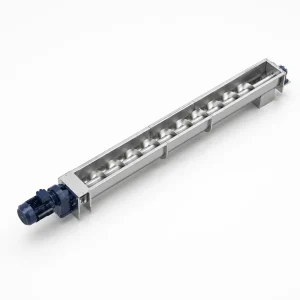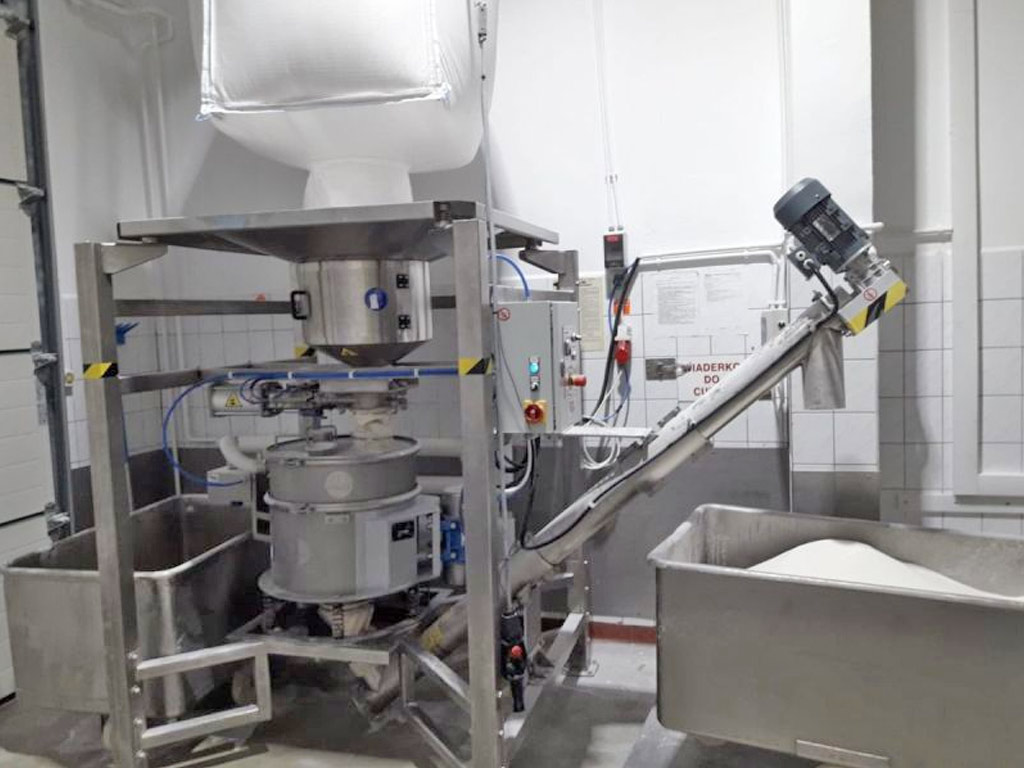
Conveying and controlled feeding are different duties
A conveyor receives a controlled flow from upstream equipment. A feeder beneath a hopper may have its inlet continuously covered by material. That changes the inlet design and starting load. Specify whether the machine transfers material, extracts it from storage or feeds a weighing process.
Changing screw speed regulates volumetric delivery; it does not directly measure kilograms. Compare volumetric and gravimetric dosing when selecting equipment for a weighing duty. When bulk density or inlet filling changes, mass flow can change at the same speed. A batch weight target requires the feeder, weighing equipment and stopping sequence to work together.
Turn the required tonnes into a real conveying duty
Record the normal and peak rate, operating hours, loose bulk density, largest particles, moisture and temperature. Use bulk density in the actual conveying condition, not the density of the solid particles. Abrasion, sticking and changes between batches also matter.
Check the route before choosing the motor
Measure the inlet-to-outlet distance, elevation difference and inclination. Material can fall back as the angle increases, reducing effective delivery. Starting with material inside the screw can demand more torque than steady operation. A larger motor alone cannot correct a restricted outlet or an unsuitable inlet.
Match the configuration to the material
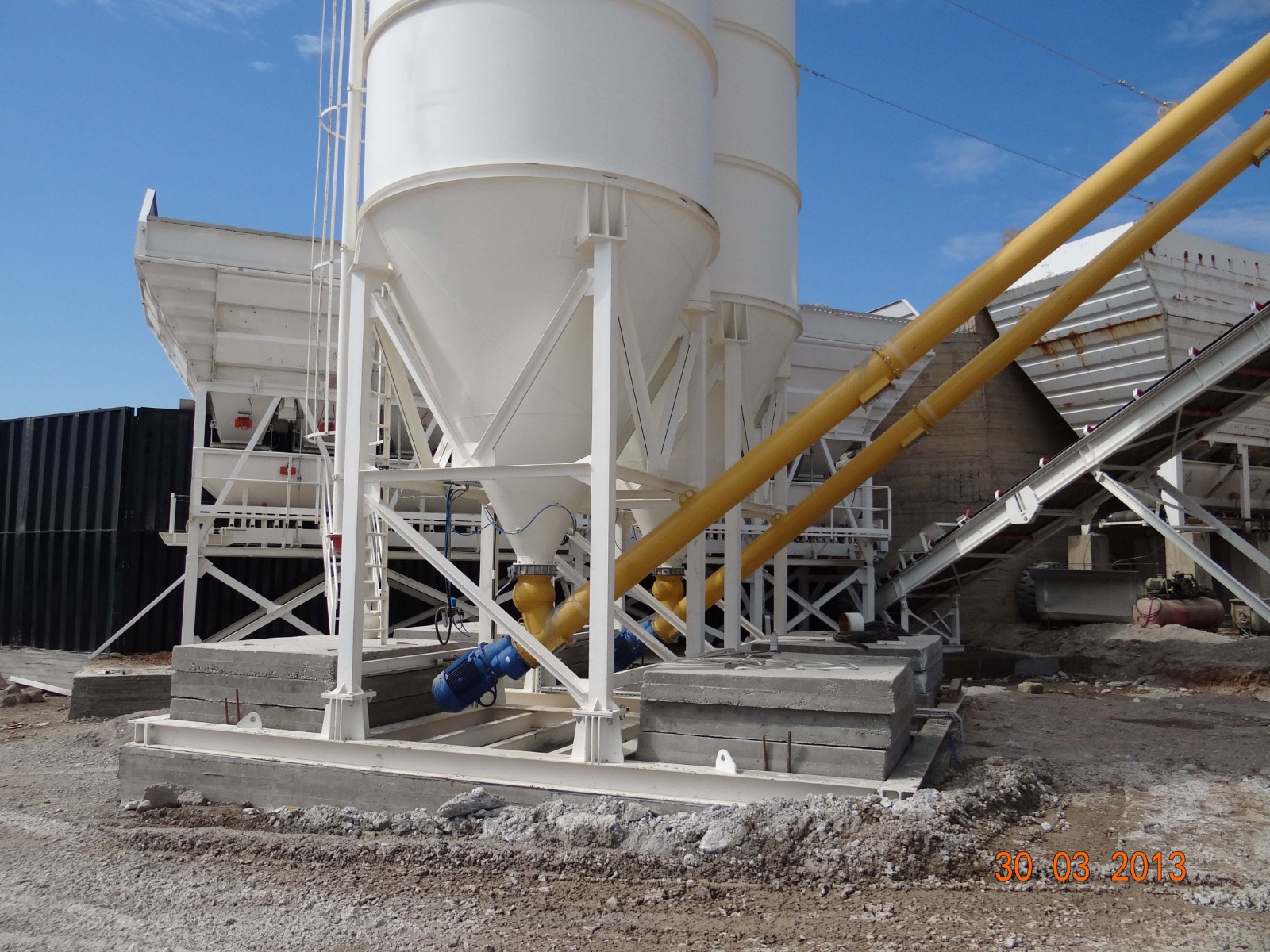
Cement Screw Conveyor
A tubular arrangement to assess for dry cement transfer from a silo. Confirm the angle, distance, feed condition and required delivery.
U-Trough Screw Conveyor
A trough with removable covers can improve access for inspection and maintenance. Check sealing, supports and the clearance needed to remove parts.
Stainless Steel Screw Conveyor
Assess material compatibility, surface finish, seals and cleaning access together. Stainless steel alone is not proof of food-contact suitability.
Shaftless Screw Conveyor
Consider for suitable sticky or fibrous duties where a central shaft may hinder flow. Liner wear, particle characteristics and the drive still require assessment.
When the existing conveyor underperforms
- Low delivery: check whether material reaches the inlet consistently and whether the outlet can accept it.
- Repeated trips: record whether they occur at startup or while running, together with the material condition and drive readings.
- Variable batch weights: check the weighing signal, feed stages and material that continues to fall after stopping.
Inspect internal parts only after the equipment has been stopped and isolated under the site’s lockout procedure.
Apply the selection to your sector
Cement & building materials
Define the silo outlet, inclined route and receiving weigh hopper.
Mining & minerals
Provide particle size and abrasion data; assess wear parts and access.
Food & beverage
Specify food-contact requirements, cleaning and allergen changeovers.
Agriculture & feed
Describe grain damage limits, moisture and recipe changes.
Chemicals
Provide compatibility, temperature and dust-hazard information.
Plastics
Distinguish pellets, powders and regrind; state contamination limits.
Recycling
Identify fibres, moisture and variable particle sizes before selecting the screw.
Where an explosive atmosphere may occur, specify the assessed zone and material data so the required equipment execution can be established.
For a quote
Prepare a selection enquiry
Send the material name or data sheet, normal and peak throughput, bulk density, route dimensions, inlet/outlet sizes and operating cycle. Include the installation angle, available electrical supply and a layout or application photograph. State any cleaning, material-contact or sealing requirements. For weighing duties, give the batch size, cycle time and required tolerance. For an existing machine, include its nameplate, current delivery and the conditions under which performance changes.
If the enquiry concerns a replacement component, use the screw conveyor spare parts or U-trough conveyor spare parts pages and provide the component dimensions. Overall conveyor dimensions alone may not identify a compatible part.
Use the Screw Conveyor Capacity Calculator for a preliminary comparison and include its assumptions and warnings. It does not replace mechanical and drive selection.