


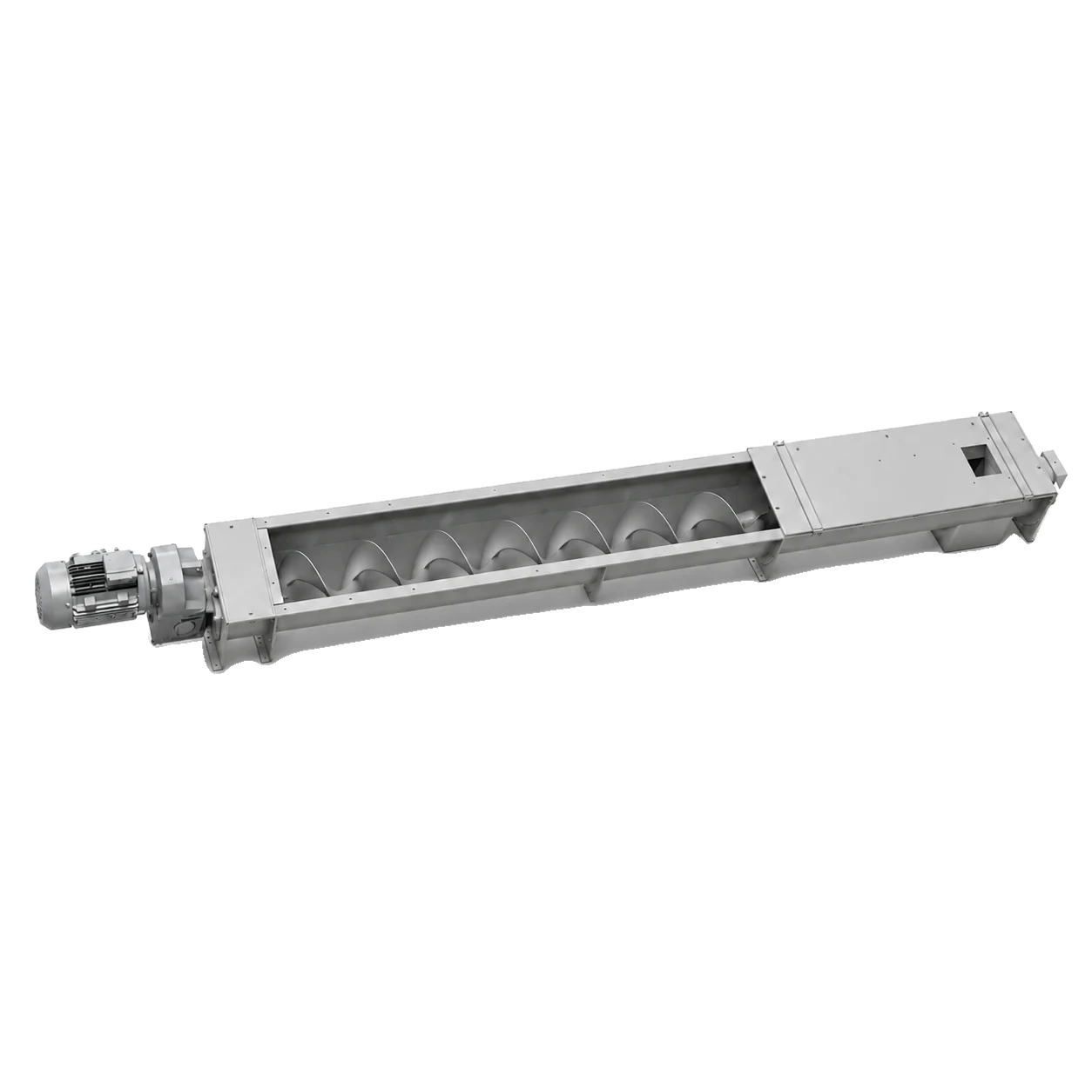
Right-drag to move the model. Drag to rotate. Use the mouse wheel or two fingers to zoom. This model illustrates the product, not a confirmed order configuration.
Shaftless Screw Conveyor
Shaftless screw conveyors for sludge, screenings and sticky materials. Review moisture, liner wear, inclination and throughput.
- Product code EQP-SC-SL
Final configuration and suitability require a technical review of your material and operating conditions.
Product overview
Request a project quotation.
Shaftless Screw Conveyor is designed for conveying wet, sticky, fibrous, irregular or difficult-flowing materials where a conventional screw conveyor with a central shaft may cause clogging, wrapping or material build-up. eQUIP manufactures shaftless screw conveyors for wastewater treatment plants, recycling facilities, waste handling systems, biomass applications, sludge handling, industrial residues and other difficult bulk material processes.
Unlike a standard shafted screw conveyor, a shaftless screw conveyor uses a heavy-duty open spiral without a central shaft. This open-center design provides more free space inside the trough and helps reduce the risk of blockage when conveying materials with high moisture content, fibrous structure, large particles or poor flow characteristics.
The conveyor can be supplied with a U-trough body, wear-resistant liner, suitable drive unit, inlet and outlet connections, inspection covers, support structure and surface treatment according to project requirements. Spiral diameter, trough length, installation angle, liner material, drive power and connection details can be configured according to material properties, required capacity and plant layout.
What a Shaftless Screw Conveyor Does
A shaftless screw conveyor transfers difficult bulk materials through a trough by using a rotating spiral without a central shaft. The shaftless spiral moves the material along the conveying path while the open center provides more space for wet, sticky, fibrous or irregular materials.
This design is especially useful where conventional shafted screw conveyors may become problematic. Materials such as sludge, screenings, organic waste, biomass, dewatered residues or wet industrial products can build up around a central shaft or wrap around rotating parts. The shaftless design helps reduce these risks and supports more stable material transfer.
Key Benefits
- Shaftless conveying spiral for difficult-flowing materials
- Helps reduce clogging, wrapping and material build-up
- Suitable for wet, sticky, fibrous, lumpy or irregular materials
- Larger open conveying area compared to shafted screw conveyors
- Especially suitable for sludge, screenings, waste, biomass and industrial residues
- U-trough construction with service-friendly access
- Wear-resistant liner options for abrasive or demanding applications
- Suitable for horizontal or inclined conveying layouts
- Configurable according to capacity, material properties and plant layout
- Robust construction for continuous industrial operation
Where it is used
Applications
- Sludge conveying in wastewater treatment plants
- Screenings and grit handling
- Waste and recycling facilities
- Biomass handling
- Dewatered material conveying
- Organic residues
- Industrial by-products
- Wet or sticky bulk materials
- Fibrous or irregular materials
- Process lines with difficult conveying conditions
Documents & technical support
The general catalogue is public. Order-specific drawings and datasheets are available only through an authorized account.
Browse the public e-catalogueMy orders and documents
Only documents assigned to your account for a specific order and equipment are available here. Membership approval alone does not grant document access.
My orders and documentsHow to select
How to select
Select for the real material, including its moisture
A shaftless spiral leaves the centre open for materials that can wrap around a shaft or build up on it. For sludge and screenings, moisture, particle size and fibres affect conveying behaviour. The liner is a wear component: its material, replacement access and operating conditions belong in the selection, alongside capacity.
Technical Flexibility
The design of a shaftless screw conveyor depends on material type, moisture content, particle size, fiber content, bulk density, conveying distance, installation angle, required capacity and operating environment. eQUIP can configure spiral diameter, spiral design, trough geometry, trough length, liner material, drive unit, inlet and outlet position and surface protection according to the project.
For wet or sticky materials, correct selection of the spiral, trough and liner is important. Wear-resistant liners can be considered for abrasive or demanding applications. For corrosive or hygiene-sensitive applications, suitable materials and surface treatments can be selected according to operating conditions.
Request a quotation
Information for your quotation
- Material sample or description
- moisture or dry-solids content
- bulk density
- largest particles and fibres
- normal and peak throughput
- length and inclination
- temperature
- liner access and electrical supply
Send a drawing or photographs and the installation country. Include units, voltage and frequency where relevant. The proposed configuration and supply scope will be confirmed in the quotation.
Questions buyers ask
Questions buyers ask
FAQ
What is a shaftless screw conveyor?
A shaftless screw conveyor is a screw conveyor that uses an open spiral without a central shaft. It is used for wet, sticky, fibrous or difficult-flowing materials where a conventional shafted screw conveyor may cause clogging or material build-up.
What is the difference between a shaftless and a shafted screw conveyor?
A shafted screw conveyor has a central shaft. A shaftless screw conveyor uses an open spiral without a shaft, creating more free space inside the trough. This is useful for wet, sticky or fibrous materials that may wrap around or build up on a central shaft.
Which materials can a shaftless screw conveyor handle?
It can handle sludge, screenings, waste, biomass, dewatered materials, organic residues, industrial by-products and wet, sticky, fibrous or difficult-flowing bulk materials.
Where is a shaftless screw conveyor used?
Shaftless screw conveyors are commonly used in wastewater treatment plants, recycling facilities, waste handling systems, biomass plants, industrial process lines and applications involving difficult materials.
Can a shaftless screw conveyor be installed on an incline?
Yes. Depending on material properties, required capacity and plant layout, a shaftless screw conveyor can be designed for horizontal or inclined installation. The suitable inclination angle should be checked according to the material behavior.
Why is a wear-resistant liner used?
A wear-resistant liner protects the trough against abrasion and reduces direct contact between the spiral, material and trough body. It can improve service life in abrasive or demanding applications.
What affects shaftless screw conveyor price?
The price depends on conveyor length, spiral diameter, trough construction, liner material, drive unit, material selection, inlet and outlet configuration, surface treatment and project-specific requirements.
Complete your selection
With this product
Explore related components and replacement parts. Final selection depends on the model, connections and operating conditions.
Spare parts
Related equipment to compare

Screw conveyors
Cement Screw Conveyor
Cement screw conveyors for silo discharge and batching plant feeding. Compare capacity, length and inclination requirements and request a project quotation.
Technical page & enquiry
Screw conveyors
U-Trough Screw Conveyor
U-trough screw conveyors with removable covers for powders and granules. Compare maintenance access, throughput and layout, and request a project quotation.
Technical page & enquiry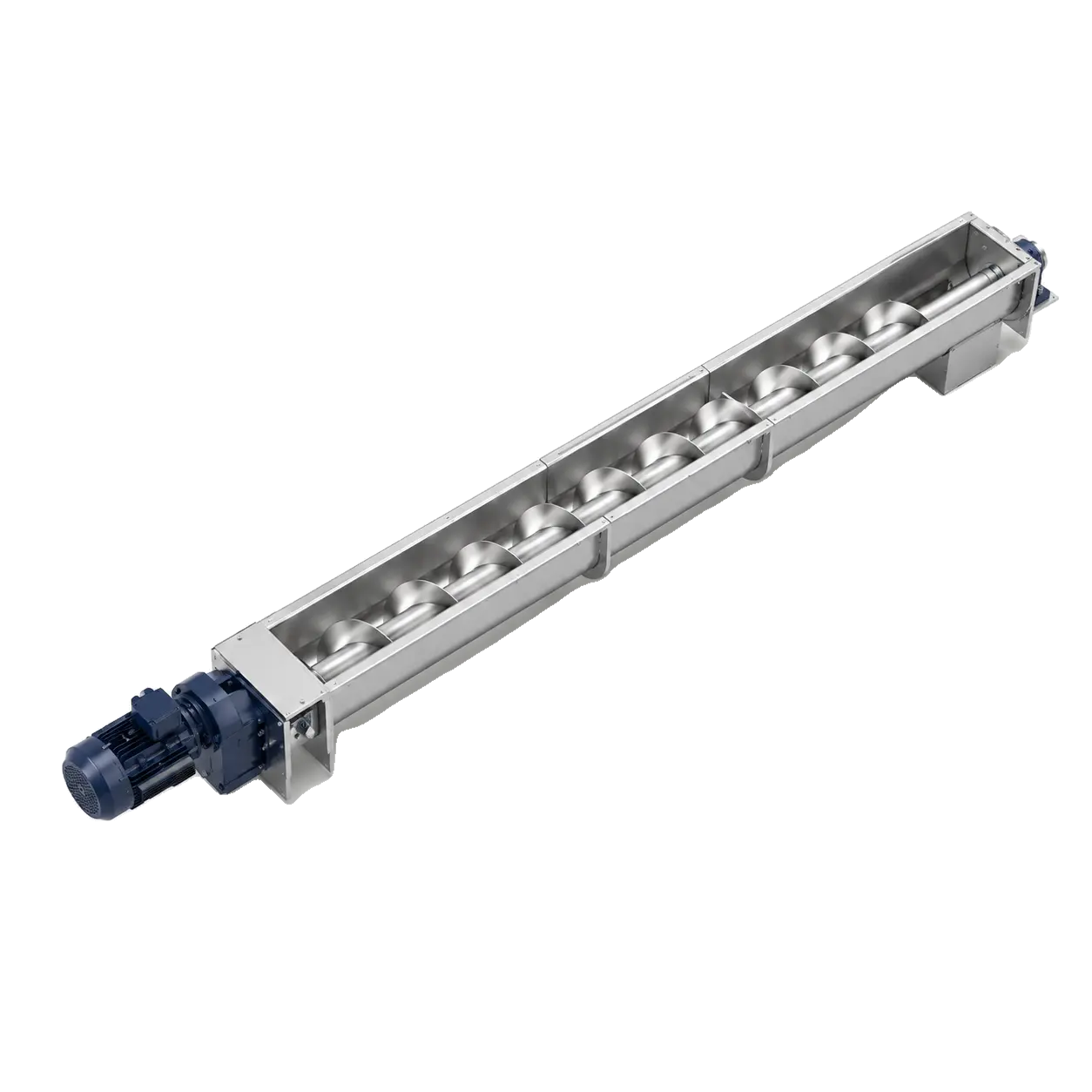
Screw conveyors
Stainless Steel Screw Conveyor
Stainless steel screw conveyors for powders and granules. Specify material grade, cleaning method, finish and capacity. Request a tailored quotation.
Technical page & enquiry


