Recovered materials can vary from batch to batch. Moisture, contaminants, particle shape and consistency affect transfer and discharge, so describe the expected range rather than one nominal material value.
From receiving to the process
Characterise the incoming material
Provide photographs and representative material information. Record moisture range, maximum particle size, contaminants, stickiness and any sharp or abrasive inclusions. Explain how the material changes during operation.
Choose the transfer route
Compare a shaftless or shafted screw arrangement against the material and layout. Include inclination, liner or wear-component access, drainage requirements where relevant, and the destination equipment.
Containment and service planning
Assess dust or leakage at the actual interfaces and establish cleaning and inspection access. Identify wear items and supply machine identification and dimensions when requesting replacement parts.
Common conveying problems with recovered materials
Capacity changes when the incoming batch changes
Record the material source, moisture range, bulk density and largest inclusions. Compare normal and difficult batches. A capacity based on one sample may not represent wet screenings, dry recovered powder and irregular regrind.
Sticky material builds up or fibrous material obstructs transfer
Describe where accumulation begins and include photographs of the actual material. Review shafted and shaftless arrangements, outlet geometry and cleaning access together; removing the centre shaft alone does not resolve every blockage.
Wear or leakage shortens the service interval
Record liner condition, wear locations and operating hours. For wet material, describe liquid leakage and drainage needs; for dry material, identify dust release points. Review seals and access to replace wear parts before choosing the layout.
Equipment to discuss
Explore these equipment families as starting points for a project discussion. The final configuration depends on your material, layout and operating requirements.
- Shaftless Screw Conveyor — An option to assess for suitable sticky or fibrous materials; liner, inclination, material variability and maintenance access affect selection.
- U-Trough Screw Conveyor — For materials that suit a shafted conveying arrangement; check inclusions, wear and cleaning requirements along the route.
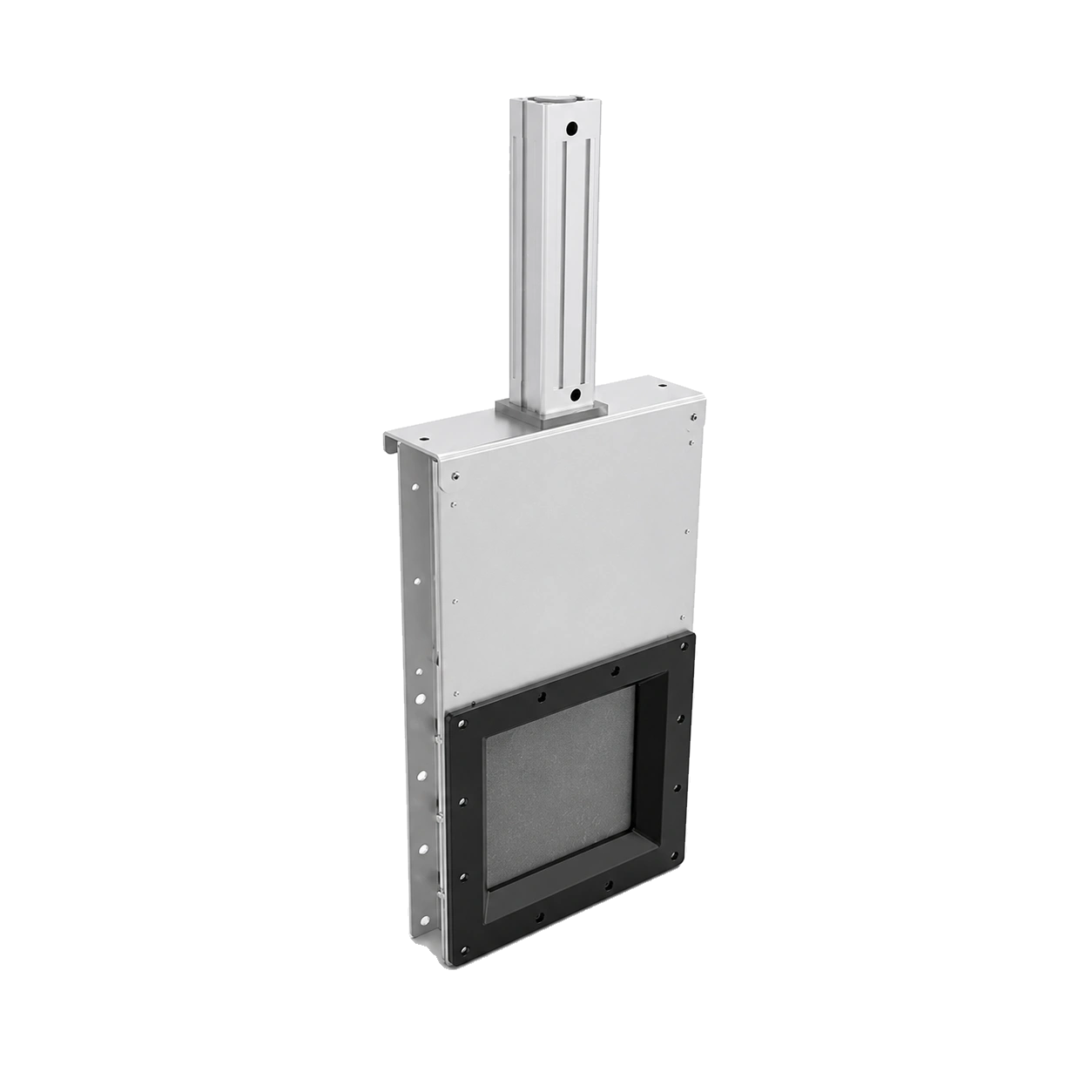
- Slide Gate Valve — For material shut-off where particle size and consistency allow reliable operation; specify the required leakage performance.
- Screw Conveyor Spare Parts — For repair planning: provide machine identification, dimensions, photographs and material duty to check compatibility before ordering.
Prepare your project enquiry
- Material source and variability.
- Moisture.
- Particle size and contaminants.
- Throughput range.
- Stickiness and abrasiveness.
- Inclination and route.
- Cleaning, drainage and maintenance requirements.
Include a drawing or photographs of the installation points and the destination equipment.
Guides for your process
- Choosing a screw conveyor starts with the material
- When a silo will not discharge consistently
- Rotary valve, slide gate or diverter: three different jobs
Frequently asked questions
Is a shaftless screw always the best option for recycled material?
No. It is an option to assess for the stated material and route. Liner wear, inclination, consistency, capacity and service access can change the choice. Representative material data is needed before selection.
How can we prepare a useful sample description for a recycling project?
Describe both the usual feed and the most difficult expected batch. Include moisture or solids content where available, maximum particle size, fibres, hard inclusions and changes in source material. Add throughput range, elevation and the receiving equipment. Photographs help, but do not replace representative material data.
Discuss your application
Request an equipment discussion for your material and plant layout.
Industry reference photograph; not an eQUIP installation. Cardboard recycling, Camp Lejeune — Lance Cpl. Paul Peterson / US Marine Corps · Public domain (US government). Resized and cropped for display.