Lime, mineral additives and recovered dust may require different contact materials, wear allowances and containment arrangements. Define the handled material and temperature before comparing equipment options.
From receiving to the process
Material and operating duty
Provide particle-size data, bulk density, abrasiveness and temperature. State whether the equipment handles a process additive, recovered dust or another material, and describe the operating hours and site conditions.
Storage and discharge
Assess storage time, outlet geometry and the history of blocked or inconsistent discharge. Review valves, feeders and flow aids as separate functions within the material route.
Transfer and maintenance access
Compare required throughput, distance and inclination with inspection access and replacement-part needs. Describe existing interfaces and available space so equipment can be assessed for the plant layout.
Common powder-handling problems in iron and steel plants
Wear repeatedly appears at the same location
Record the material, particle-size range, operating hours and wear location. Review screw flights, troughs and transfer points together. Replacement dimensions alone do not explain why a component wore prematurely.
An additive silo discharges intermittently
Compare moisture, storage time and outlet conditions with normal operation. Establish whether the interruption starts inside the silo or at the downstream feeder before choosing an activator or changing the valve.
Recovered dust leaks at connections
Identify whether leakage occurs during filling, conveying or shutdown and record the pressure conditions. Describe the recovered dust and temperature range so seals, connections and dust collection can be assessed together.
Equipment to discuss
Explore these equipment families as starting points for a project discussion. The final configuration depends on your material, layout and operating requirements.
- U-Trough Screw Conveyor — For transferring suitable dry powders and granules; wear allowance, temperature and inspection access need duty-specific review.
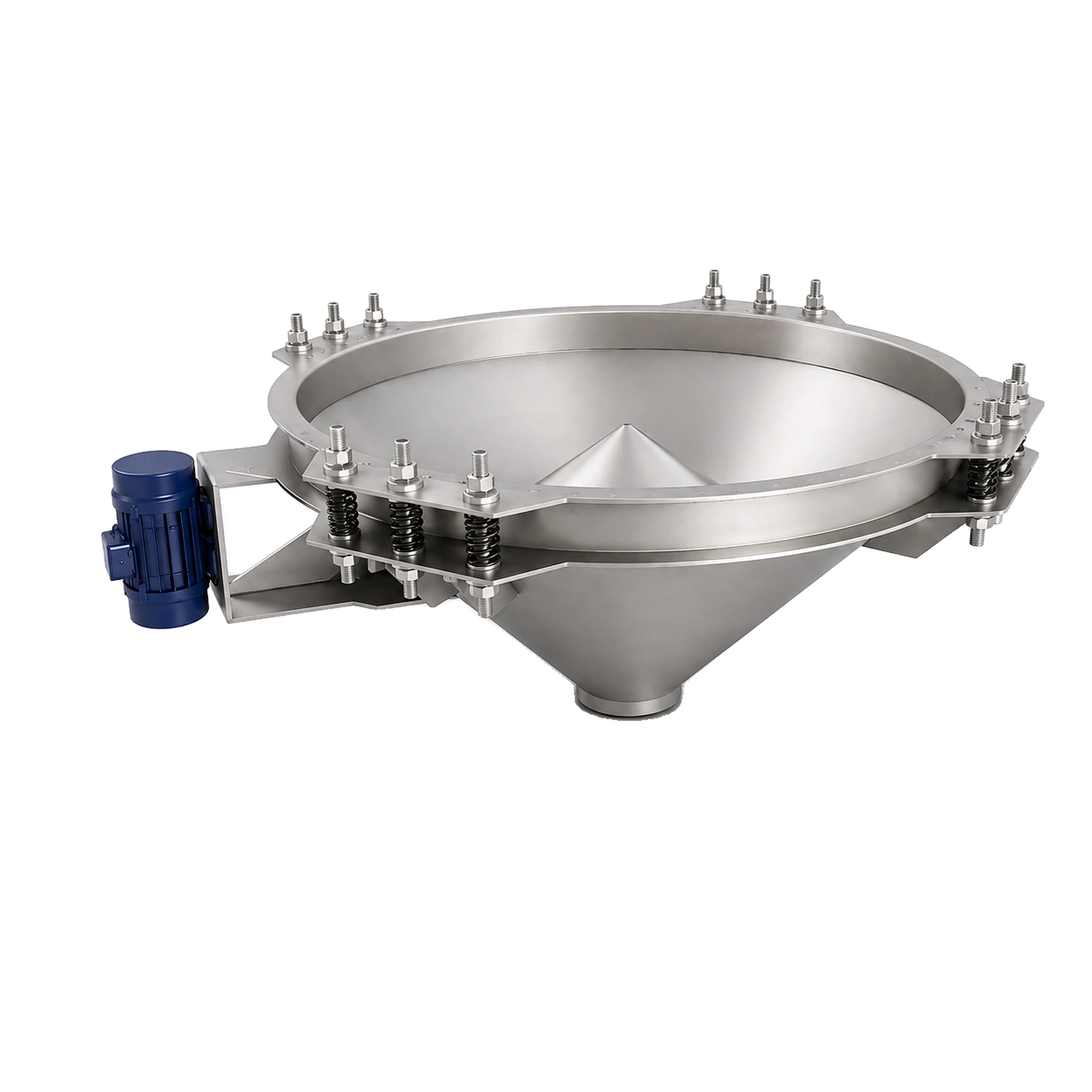
- Bin Activator — For assessing discharge assistance under a silo; material flow properties, temperature and structural loads govern suitability.
- Rotary Valve — For controlled volumetric feeding or a specified airlock duty; assess wear, clearances, pressure and temperature for the complete assembly.
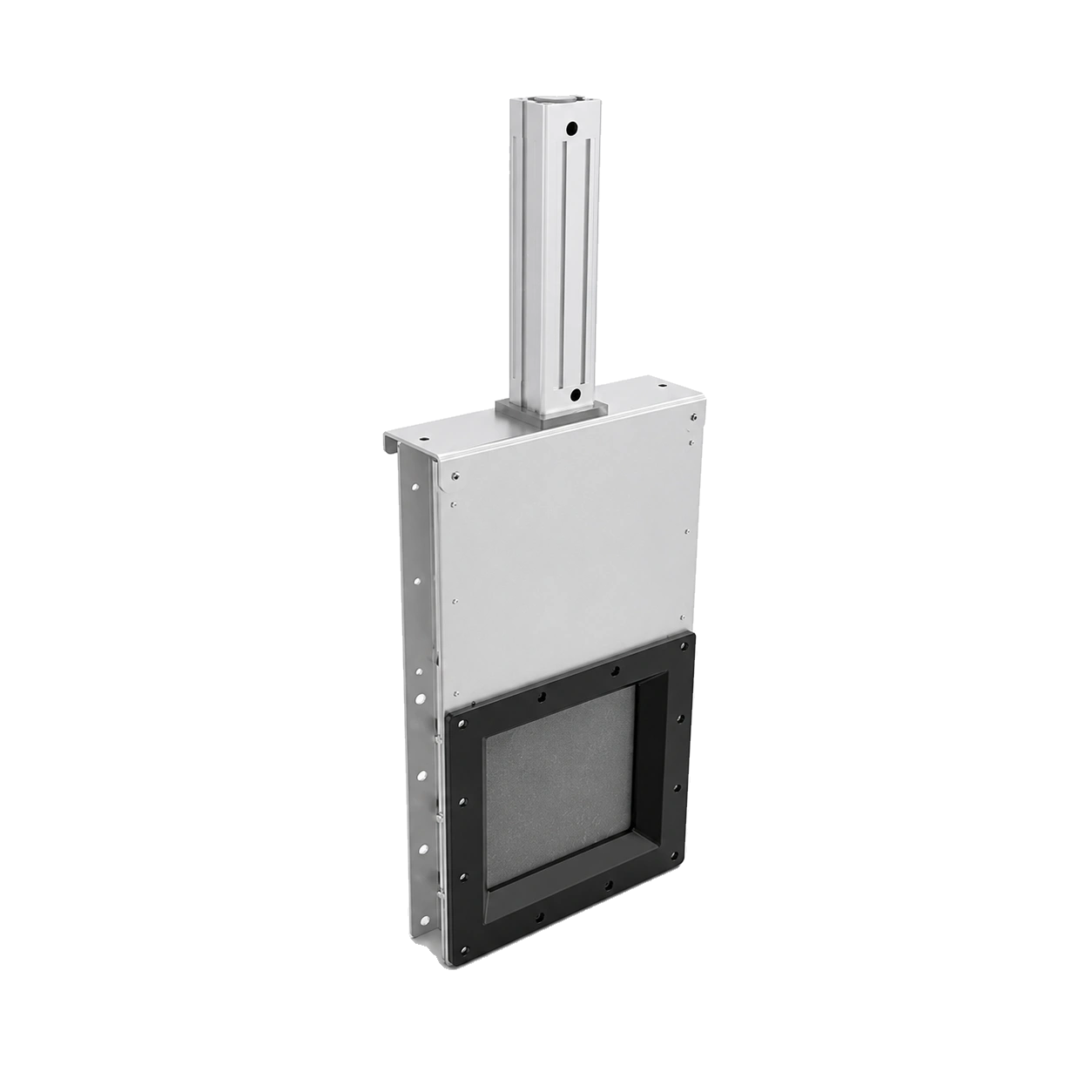
- Slide Gate Valve — For opening or closing a powder outlet; specify leakage requirements and whether closure is required through a loaded material column.
Prepare your project enquiry
- Material and particle size.
- Bulk density.
- Abrasiveness and temperature.
- Throughput and duty cycle.
- Dust characteristics.
- Inlet and outlet drawings.
- Maintenance access and existing equipment details.
Include a drawing or photographs of the installation points and the destination equipment.
Guides for your process
- When a silo will not discharge consistently
- Choosing a screw conveyor starts with the material
- Filter pressure drop is rising: what should you record?
Frequently asked questions
Can ordinary powder equipment handle hot process material?
Temperature capability must be checked for the complete assembly, including bearings, seals, drives and flexible connections. Provide the operating and peak temperatures before requesting a configuration.
What is needed to assess a replacement during a planned shutdown?
Provide the machine identification, inlet and outlet drawings, drive details, material data and photographs of the worn parts. State the available installation space and maintenance window. Confirm interface dimensions and operating duty before treating a replacement as interchangeable.
Discuss your application
Request an equipment discussion for your material and plant layout.
Industry reference photograph; not an eQUIP installation. Colored steel coils — Fumikas Sagisavas · CC0 1.0. Resized and cropped for display.