Pellets, fine polymer powders and recycled regrind can behave very differently. Describe particle shape, fines, bulk density and acceptable product damage before deciding how material should move through the plant.
From receiving to the process
Receiving and material separation
Establish the receiving format, storage capacity and changeover routine. Identify colour or grade separation requirements and the points where contamination or retained material would affect production.
Conveying and routing
Compare distance, elevation and material behaviour across the complete transfer route. Specify acceptable pellet damage, fines generation and access for cleaning. Review screw and pneumatic routes against the same process requirements.
Discharge and feeding
Match the outlet and feeder to the downstream demand. Define whether the task is transfer, volumetric feeding or a measured batch, and describe the existing weighing or dosing equipment.
Common material-handling problems in plastics production
Colour or grade carries over after a change
Trace the whole route, including diverter pockets, outlets and connections. Define the permitted carryover and cleaning method before choosing a shared route for different grades.
Regrind feeds unevenly
Record particle shape, size range, fines and bulk-density variation. Compare hopper discharge with the downstream demand; a feeder selected for uniform pellets may require reassessment for irregular regrind.
More fines appear after conveying
Compare samples before and after transfer and record the operating rate and route. Review material damage alongside distance, elevation and equipment settings instead of selecting only by nominal throughput.
Equipment to discuss
Explore these equipment families as starting points for a project discussion. The final configuration depends on your material, layout and operating requirements.
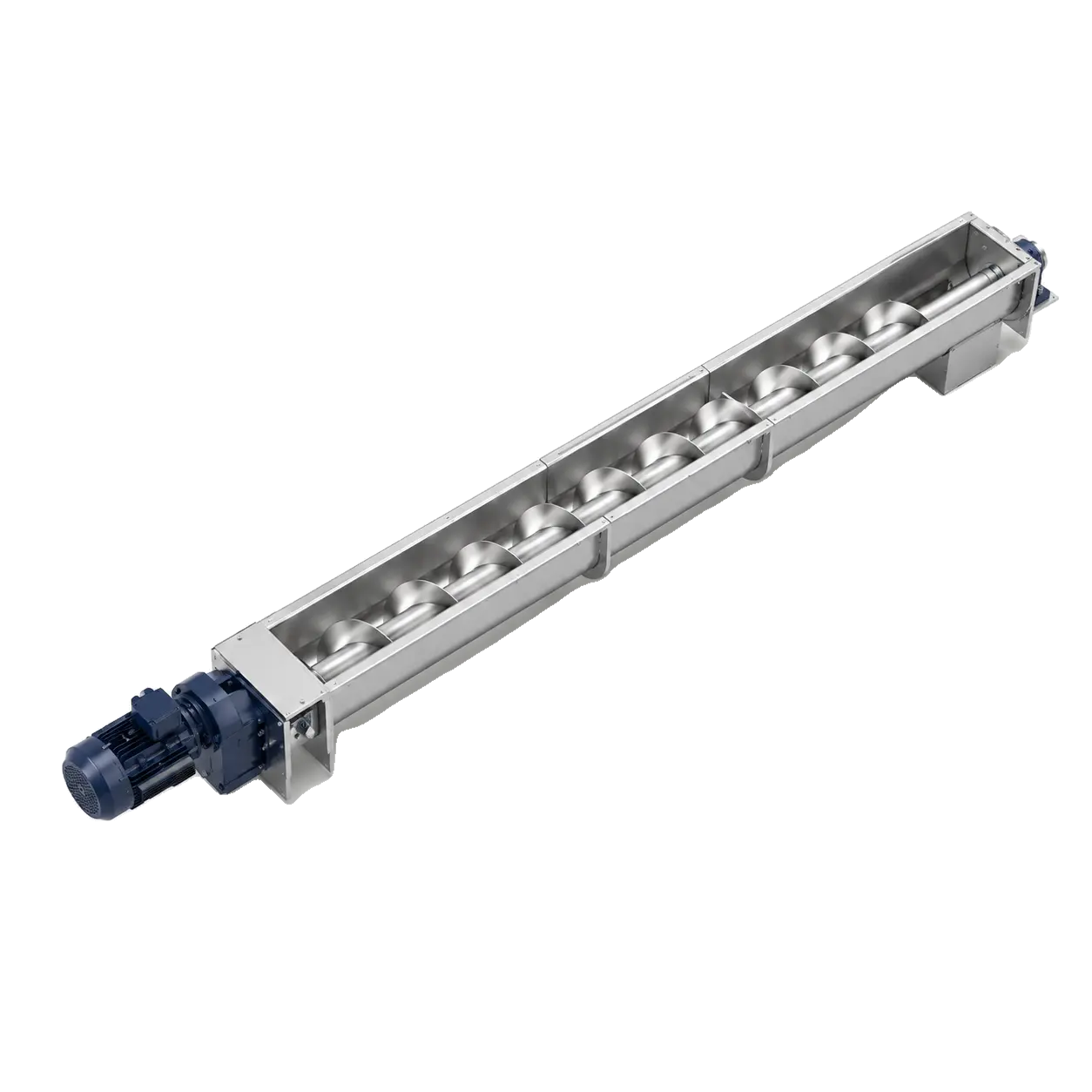
- U-Trough Screw Conveyor — For mechanical transfer where material behaviour and access to the trough suit the route; review covers and cleaning access.
- Stainless Steel Screw Conveyor — For transfer where contact material, contamination control and cleaning requirements justify the selected construction.
- Rotary Valve — For controlled volumetric feeding; assess pellet shearing, clearances and the required pressure duty.
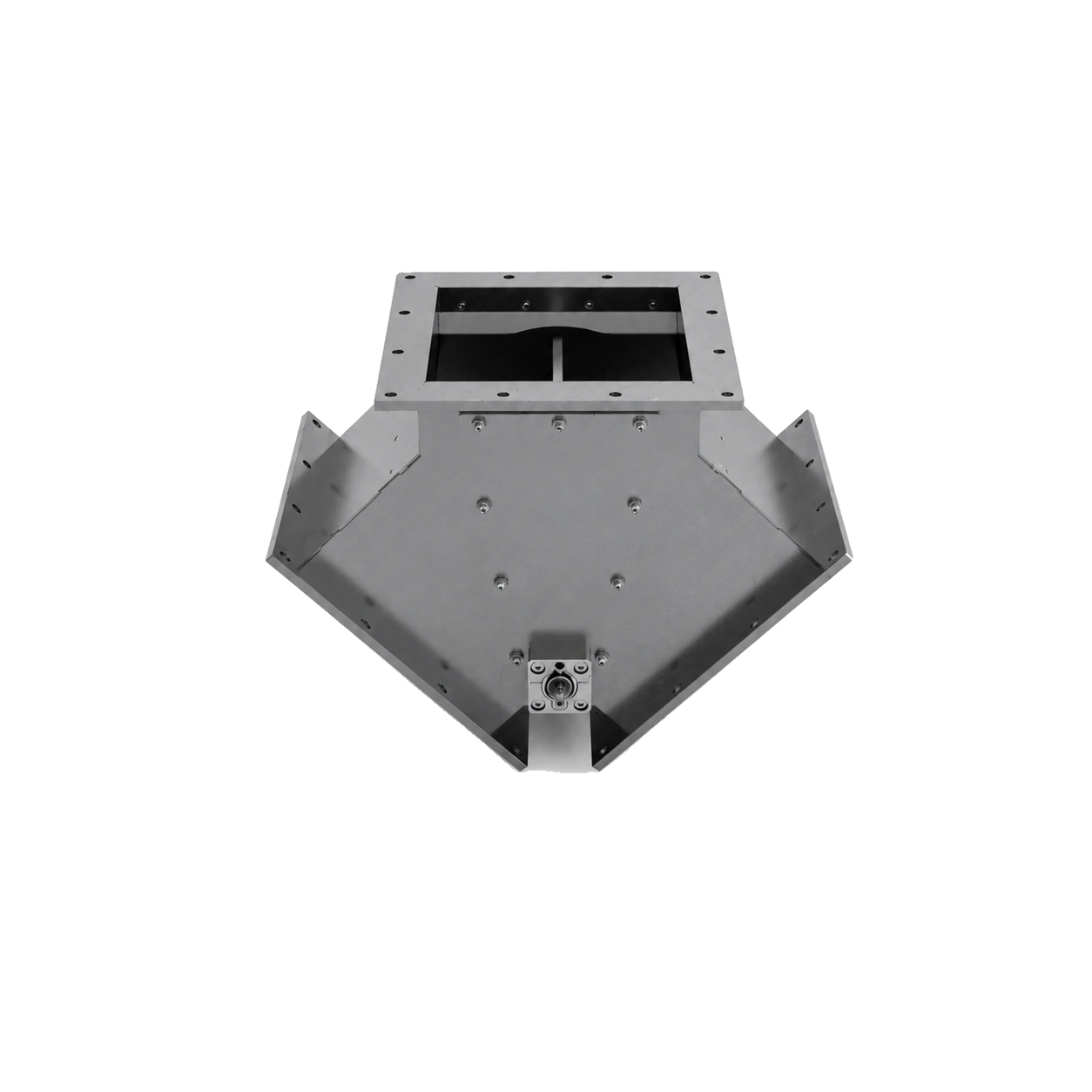
- Diverter Flap Valve — For routing material to different destinations; review sealing and retained material during colour or grade changes.
Prepare your project enquiry
- Polymer and grade.
- pellet, powder or regrind form.
- particle size and fines.
- bulk density.
- throughput.
- acceptable degradation.
- cleaning and grade changes.
- receiving and destination equipment.
Include a drawing or photographs of the installation points and the destination equipment.
Guides for your process
- Screw or pneumatic conveying: which route fits your plant?
- Volumetric or gravimetric dosing: what does your recipe need?
- Rotary valve, slide gate or diverter: three different jobs
Frequently asked questions
Can pellets and regrind use the same conveying configuration?
They may need different arrangements. Shape, size distribution, fines and flow behaviour change filling, wear and discharge. Assess representative material data and the complete route before confirming a common configuration.
Can recycled material and virgin pellets share a line?
A shared line needs a review of both materials, the changeover procedure and the downstream quality requirement. Provide representative regrind data, the intended blend range and acceptable contamination. Confirm storage, discharge and feeding duties for each material rather than relying on the virgin-pellet capacity alone.
Discuss your application
Request an equipment discussion for your material and plant layout.
Industry reference photograph; not an eQUIP installation. Plastic pellets — SuSanA Secretariat / C. Rieck · CC BY 2.0. Resized and cropped for display.