Grains, meals and feed additives place different demands on handling equipment. Record the material form, moisture, storage conditions and feed recipe requirements before sizing the storage and transfer route.
From receiving to the process
Storage and reliable discharge
Define stock capacity, storage time and the range of materials handled. Moisture and compaction can change flow behaviour. Review the outlet, hopper geometry and downstream feeder together before choosing discharge aids.
Ingredient transfer
Compare conveying distance, elevation and duty cycle. Include access for inspection and cleaning, acceptable product damage and the separation needed between different ingredients or batches.
Batch feeding and dust capture
Describe the weighing or mixing sequence and the required control of ingredient flow. Record dust-release points at receiving, sack tipping and transfer interfaces so extraction can be assessed with the workstation.
Common handling problems in grain and feed plants
The silo contains material but the mixer is waiting
Record which ingredient stops flowing, storage duration and moisture. Compare the outlet and hopper geometry with the feeder demand. Grain, meal and fine additives should not be treated as having identical flow behaviour.
The same feeder setting gives different batch weights
Check bulk-density changes and the weighing sequence, including material still travelling after the feeder stops. Define batch size and required accuracy separately from conveyor throughput.
Material from a previous recipe remains in the line
Identify retention at troughs, connections and outlets. Agree the cleaning and changeover procedure, particularly where small additions or incompatible recipes share a route. Include access for inspection in the layout.
Equipment to discuss
Explore these equipment families as starting points for a project discussion. The final configuration depends on your material, layout and operating requirements.
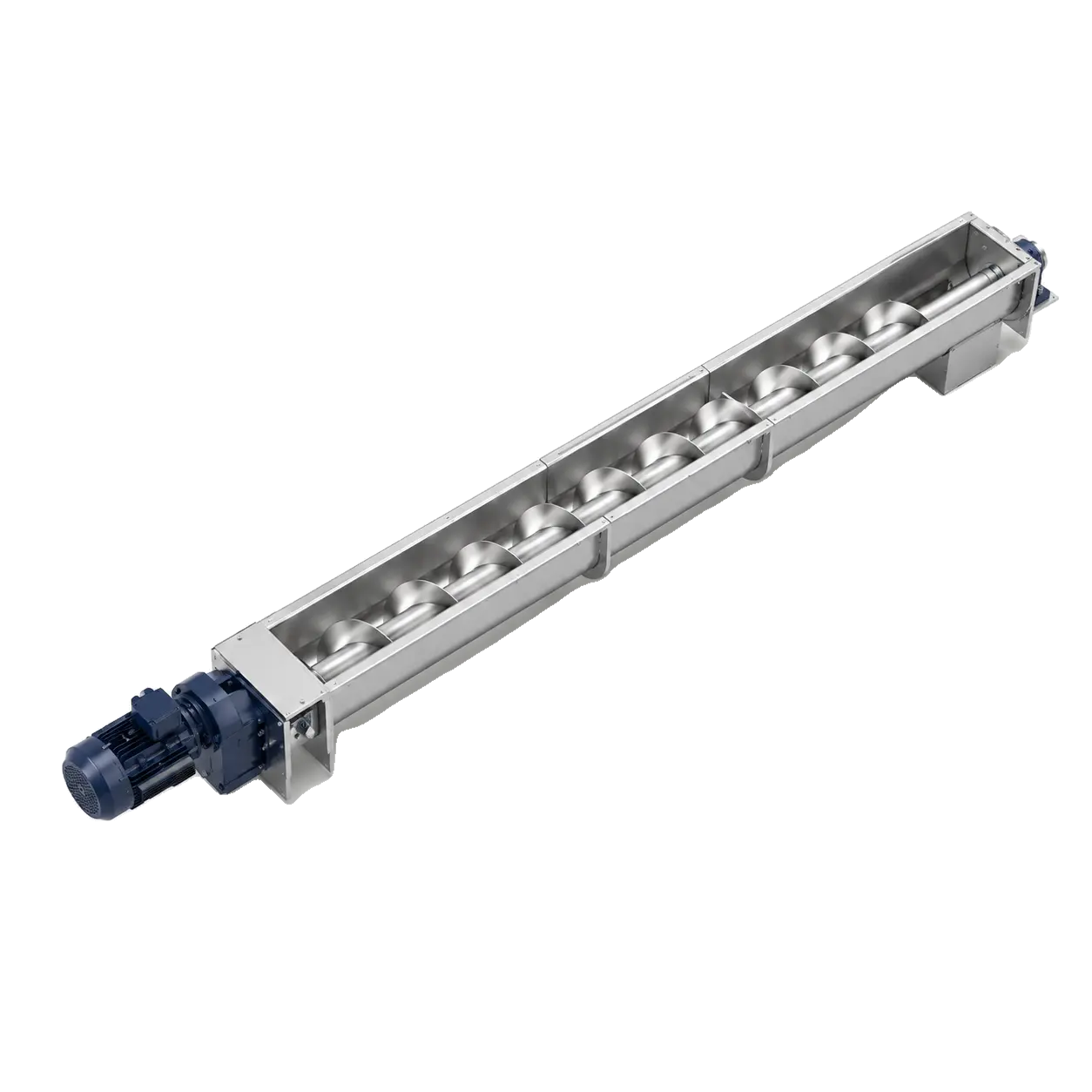
- U-Trough Screw Conveyor — For transferring meals and feed ingredients where the route, cover arrangement and cleaning access suit the material.
- Stainless Steel Screw Conveyor — For duties where contact-material and cleaning requirements justify stainless construction; seals and surface finish still require specification.
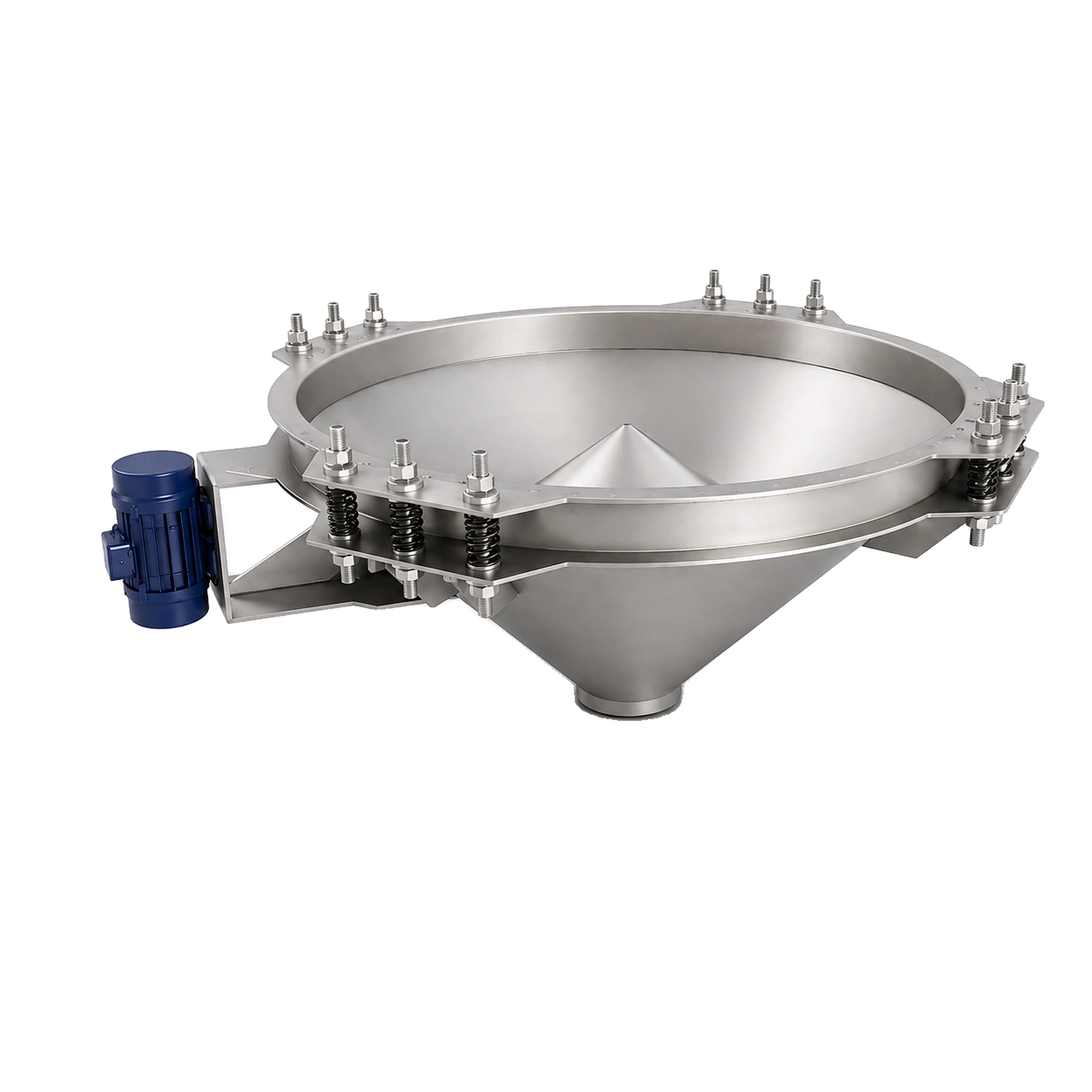
- Bin Activator — For assessing discharge assistance beneath a silo; selection depends on flow properties, outlet geometry and the supporting structure.
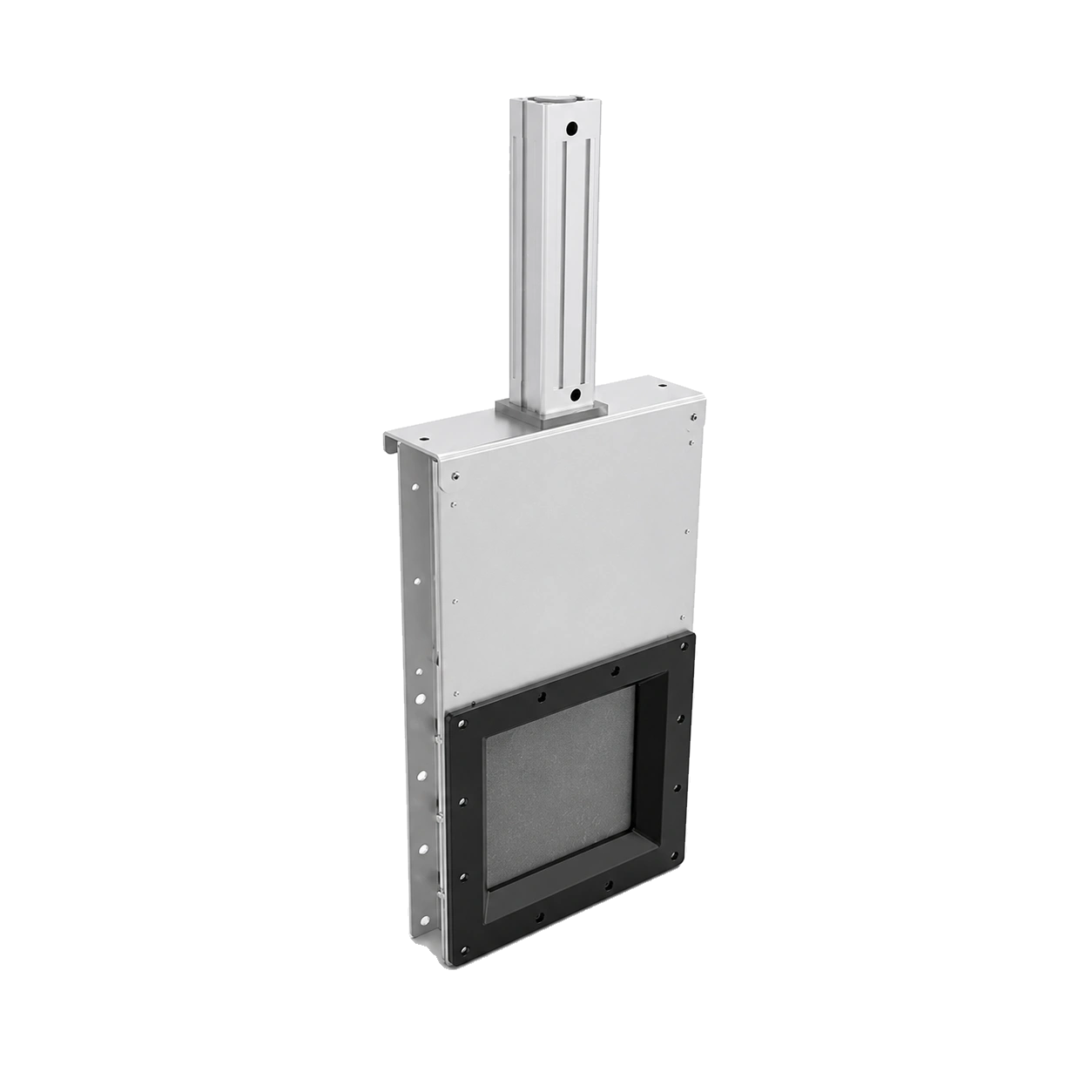
- Slide Gate Valve — For opening or closing ingredient outlets; it does not replace a weighing system or precision dosing control.
Prepare your project enquiry
- Ingredient list.
- Bulk density and moisture.
- Throughput and storage time.
- Cleaning and batch separation.
- Receiving format.
- Weighing sequence.
- Site layout and supply voltage.
Include a drawing or photographs of the installation points and the destination equipment.
Guides for your process
- Volumetric or gravimetric dosing: what does your recipe need?
- Dust when opening sacks: look beyond the filter
- When a silo will not discharge consistently
Frequently asked questions
Does conveyor throughput define feed-batch accuracy?
No. Throughput describes material transfer. Batch accuracy also depends on the weighing system, feeding control, material consistency and process sequence. Specify the recipe and weighing requirements separately.
What information helps when upgrading an existing feed line?
Send the ingredient range, typical and smallest batch sizes, receiving method, storage time and a route drawing. Identify the current bottleneck and provide the weighing sequence, cleaning procedure and available installation space. This helps distinguish a conveying-capacity issue from a discharge or batch-control issue.
Discuss your application
Request an equipment discussion for your material and plant layout.
Industry reference photograph; not an eQUIP installation. Grain silos, Prosper, Texas — Ranch9613 · CC0 1.0. Resized and cropped for display.