Flour, starch, sugar and other dry ingredients can require different handling arrangements. Start with the ingredient, its flow behaviour and the cleaning routine, then assess storage, transfer and feeding as one route.
From receiving to the process
Receiving and storage
Describe how ingredients arrive: tanker, big bag or sack. Establish stock capacity, segregation and the receiving point before choosing storage and venting equipment. Record allergen separation and traceability requirements.
Enclosed transfer and access
Compare the conveying route, cleaning access and product retention points. Stainless construction alone does not establish hygienic suitability; the contact surfaces, seals, finish and cleaning procedure must also be specified.
Feeding the process
Define whether the task is continuous transfer or measured batch feeding. A conveyor capacity figure does not establish recipe accuracy. Describe the downstream mixer, weighing equipment and demand cycle.
Common ingredient-handling problems
Powder escapes during bag emptying
Record whether dust appears when opening, tipping or removing the empty sack. Review the receiving connection and extraction arrangement together; a conveyor enclosure alone does not control dust at the operator’s station.
The mixer waits while the hopper still contains material
Record the ingredient, storage time and whether discharge stops completely or becomes intermittent. Check outlet geometry and feeder demand before choosing a flow aid.
Traces of the previous recipe remain
Identify retention points at joints, outlets and seals. Agree access, the cleaning method and a changeover check with your production team before selecting equipment.
Equipment to discuss
Explore these equipment families as starting points for a project discussion. The final configuration depends on your material, layout and operating requirements.
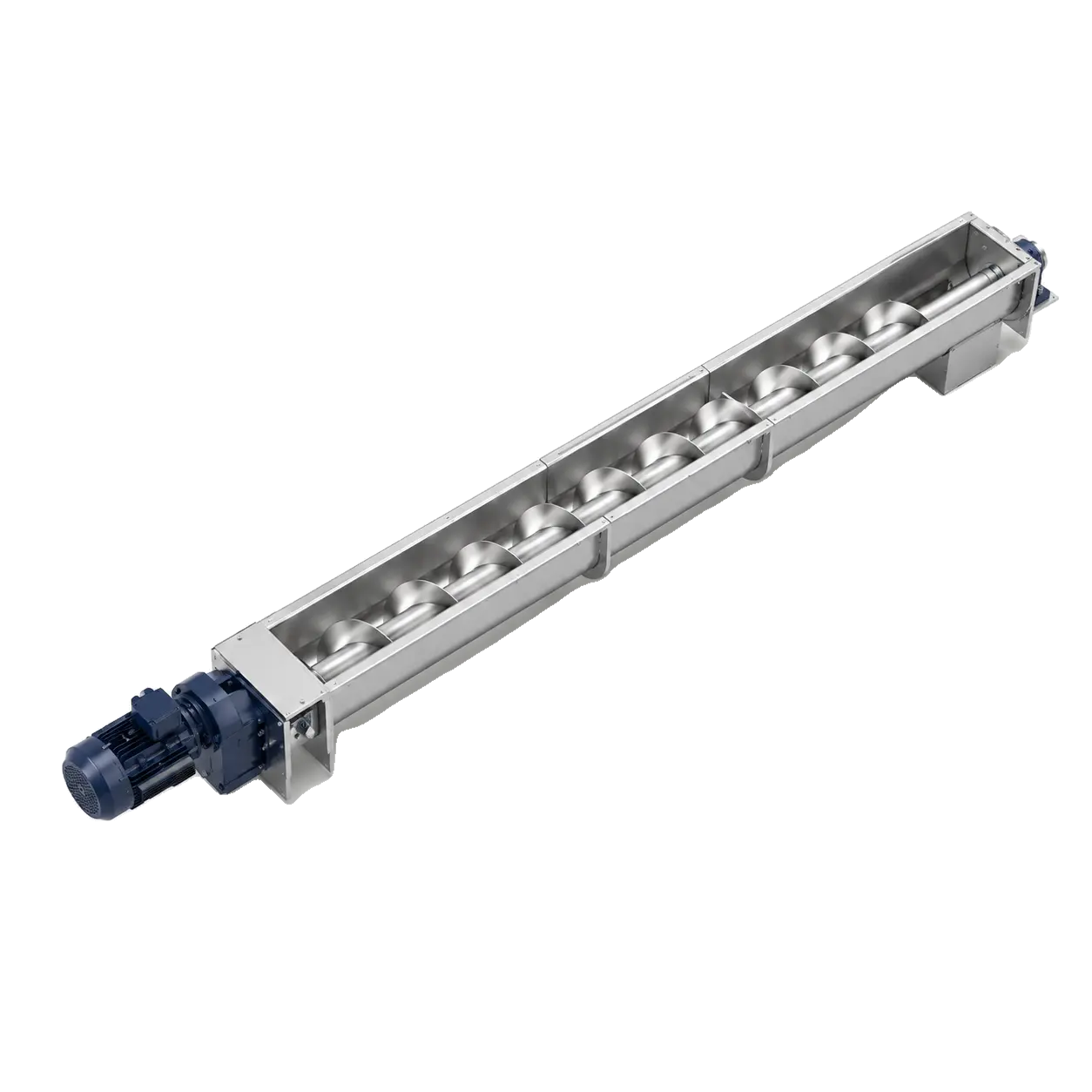
- Stainless Steel Screw Conveyor — For enclosed ingredient transfer where contact materials and cleaning requirements must be specified together.
- U-Trough Screw Conveyor — For routes where inspection and cleaning access influence the design; cover, seals and access arrangements require review.
- Rotary Valve — For controlled volumetric discharge; recipe weighing and accuracy require a separate assessment.
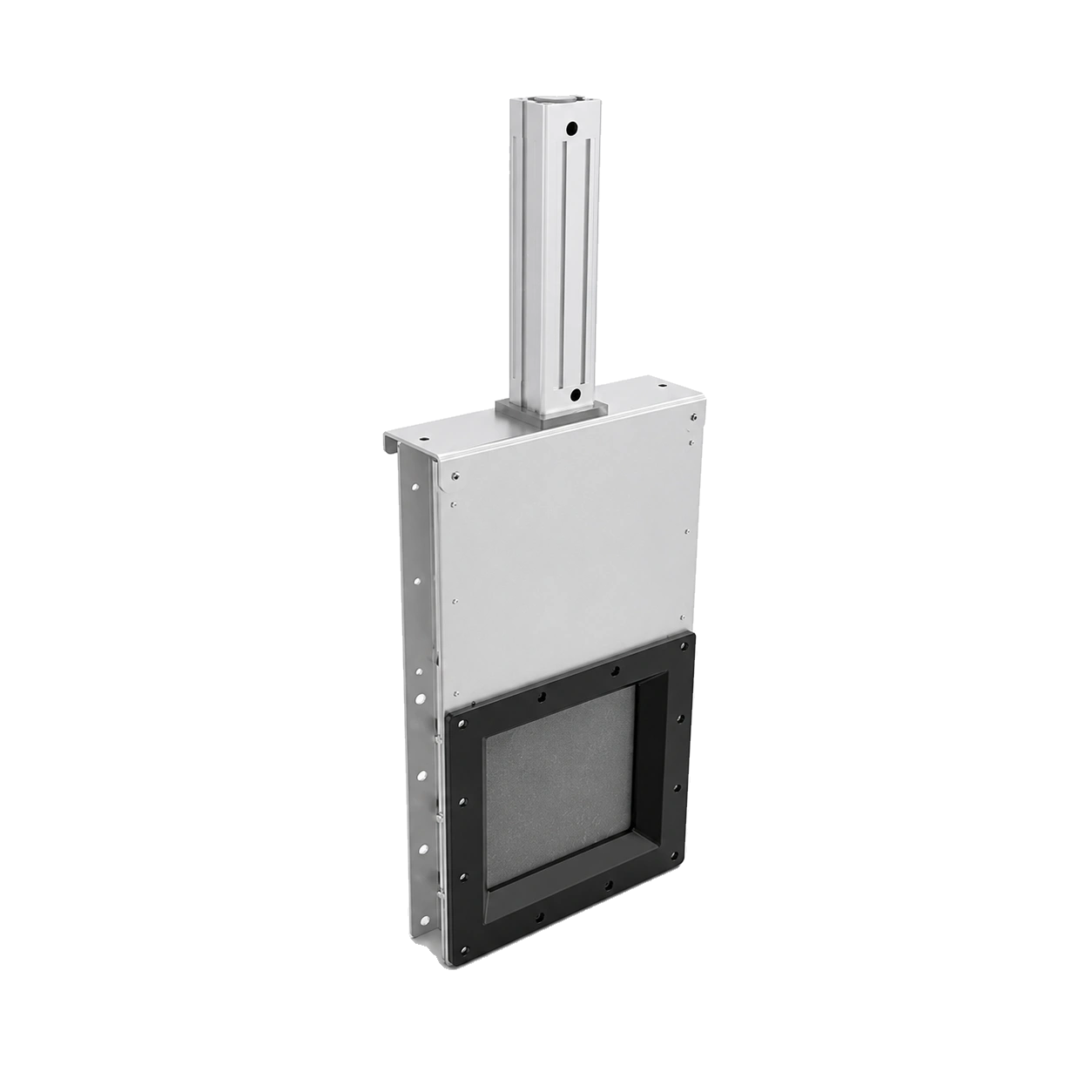
- Slide Gate Valve — For opening or closing a material outlet; it is not a precision recipe doser.
Prepare your project enquiry
- Ingredient and bulk density.
- moisture and temperature.
- required throughput.
- cleaning method and frequency.
- allergen or cross-contamination constraints.
- material-contact specifications.
- layout and downstream process.
Include a drawing or photographs of the installation points and the destination equipment.
Guides for your process
- Big-bag unloading system selection
- Dust when opening sacks: look beyond the filter
- Volumetric or gravimetric dosing: what does your recipe need?
Frequently asked questions
Can a standard conveyor be used for food ingredients?
Selection requires a review of the actual ingredient and hygiene requirements. Specify contact materials, surface finish, seals, cleaning access and changeovers before agreeing the configuration.
What should we send for an existing food production line?
Send the ingredient list, a simple route drawing, batch weight or continuous demand, available installation space and the main operating problem. Add the cleaning procedure and acceptable carryover between recipes so that equipment selection addresses the actual changeover.
Discuss your application
Request an equipment discussion for your material and plant layout.
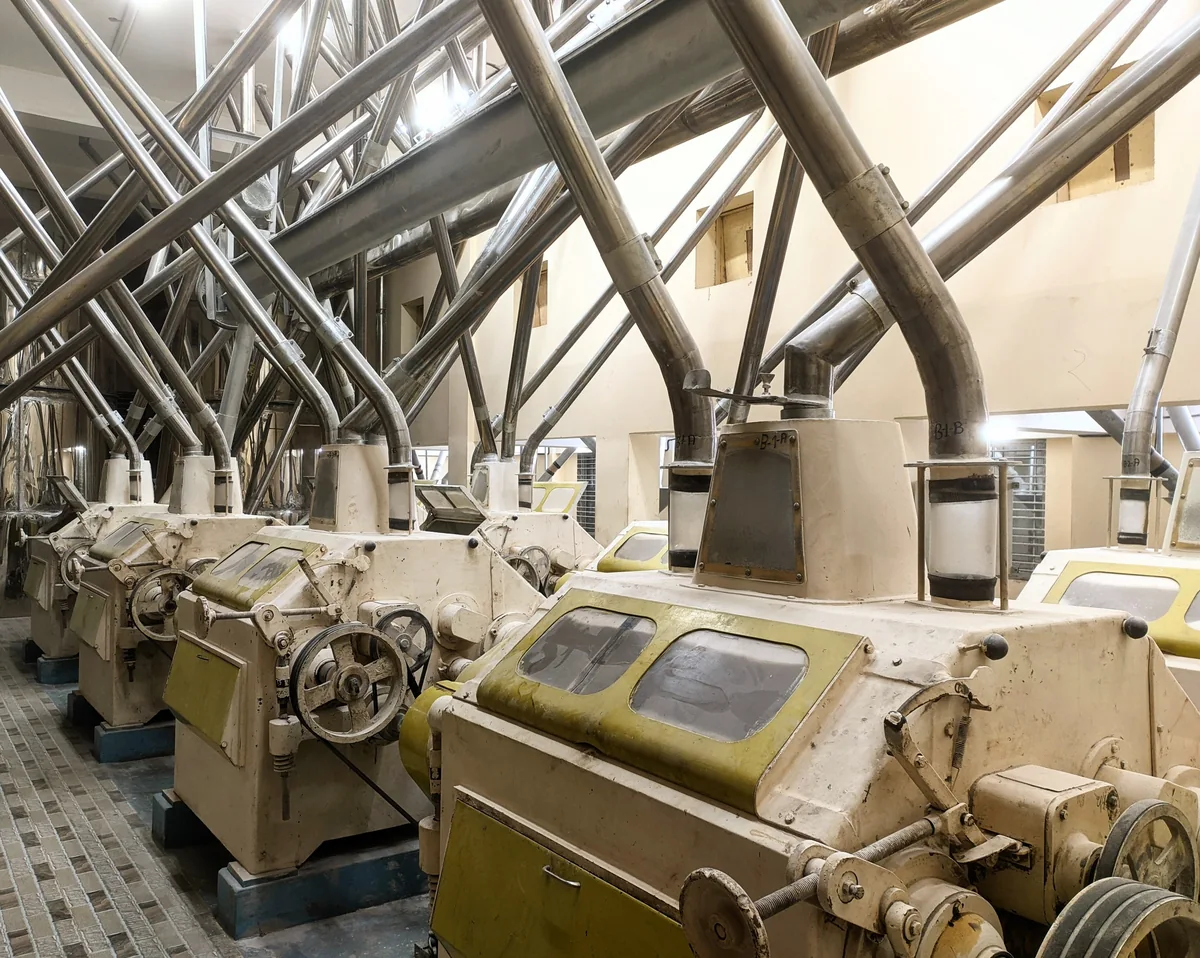
Industry reference photograph; not an eQUIP installation. Flour mill 3 — AlbeitPK · CC BY-SA 4.0. Resized and cropped for display.