Establish a comparable baseline
Differential pressure measures the difference between the dirty and clean sides of the filter. Compare readings during the same operating condition: similar airflow, production rate and cleaning stage. A fan-speed change can alter the reading even without a new filter problem.
Record the unit and instrument range. Do not compare a value in pascals directly with one in millibars: 1 mbar equals 100 Pa. Use the equipment’s specified operating and alarm limits rather than a generic limit taken from another filter.
Read the pattern before replacing parts
- Gradual rise: examine accumulating dust, material changes and whether normal cleaning restores the usual reading.
- Sudden rise: investigate interrupted cleaning, discharge problems or changed process conditions.
- Sudden fall with visible dust: investigate filter integrity and sealing; a lower reading is not automatically an improvement.
- An implausible or fixed reading: check the measurement connections and instrument before drawing conclusions.
Check the support systems
Verify compressed-air availability during operation, not only when the plant is idle. The cleaning system needs the pressure, volume and air quality specified for that unit. Check controller operation and pulse-valve function through the prescribed maintenance procedure.
The dust hopper must discharge properly. Accumulated dust can be re-entrained or interfere with filtration. Identify the discharge valve, downstream container and any level or drive fault. Avoid opening inspection covers or servicing a pressurised cleaning system while operating.
For a quote
Decide on maintenance from evidence
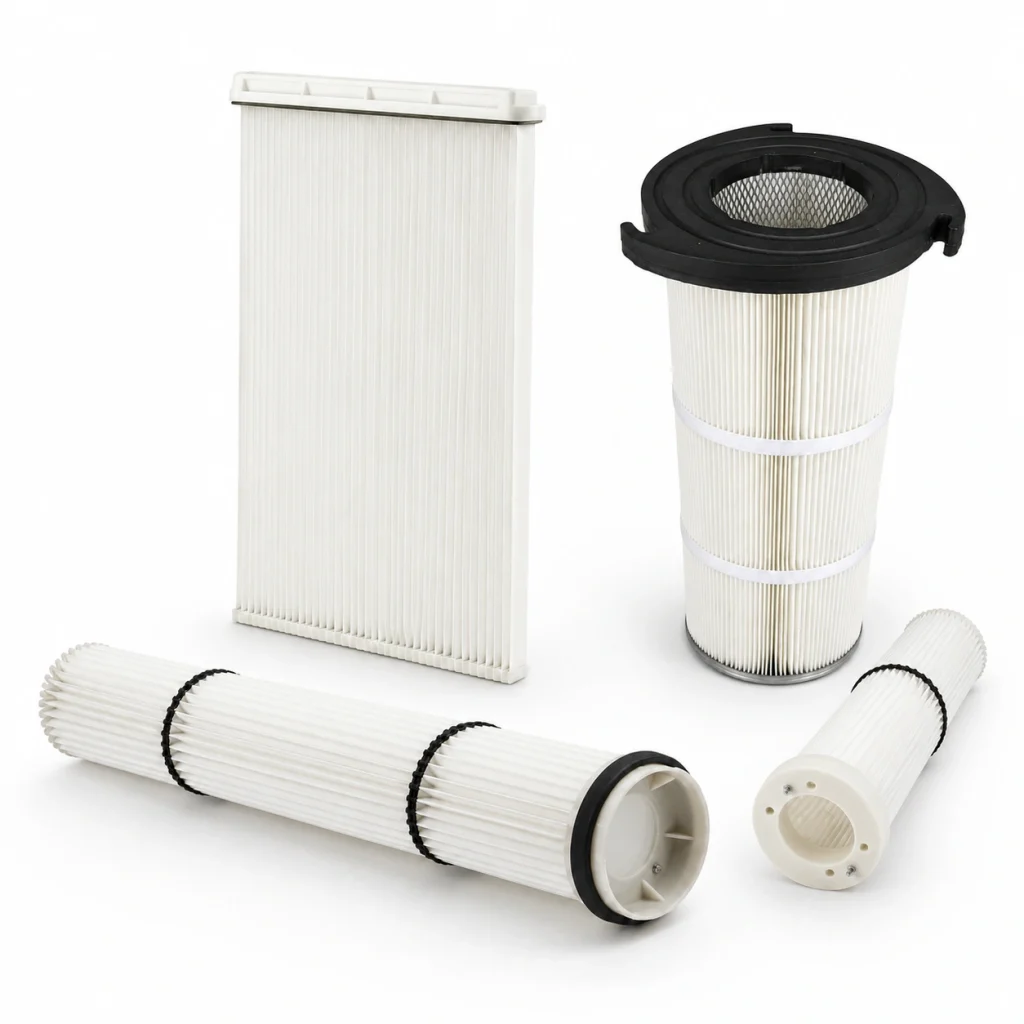
If the normal condition is not restored after correcting supply, cleaning and discharge faults, inspect the filter elements and seals following the manufacturer’s procedure. Match replacements to the exact model, dimensions, media and application. Do not wash or blow out elements unless their maintenance instructions permit it.
For a useful maintenance enquiry, send filter identification, pressure readings before and after cleaning, operating airflow if available, dust type, photographs and recent changes. Food, chemical and mineral duties may need different media and cleaning provisions; appearance alone cannot establish suitability.
Send the material data and a photograph or layout of the installation so we can define the equipment and connection requirements.