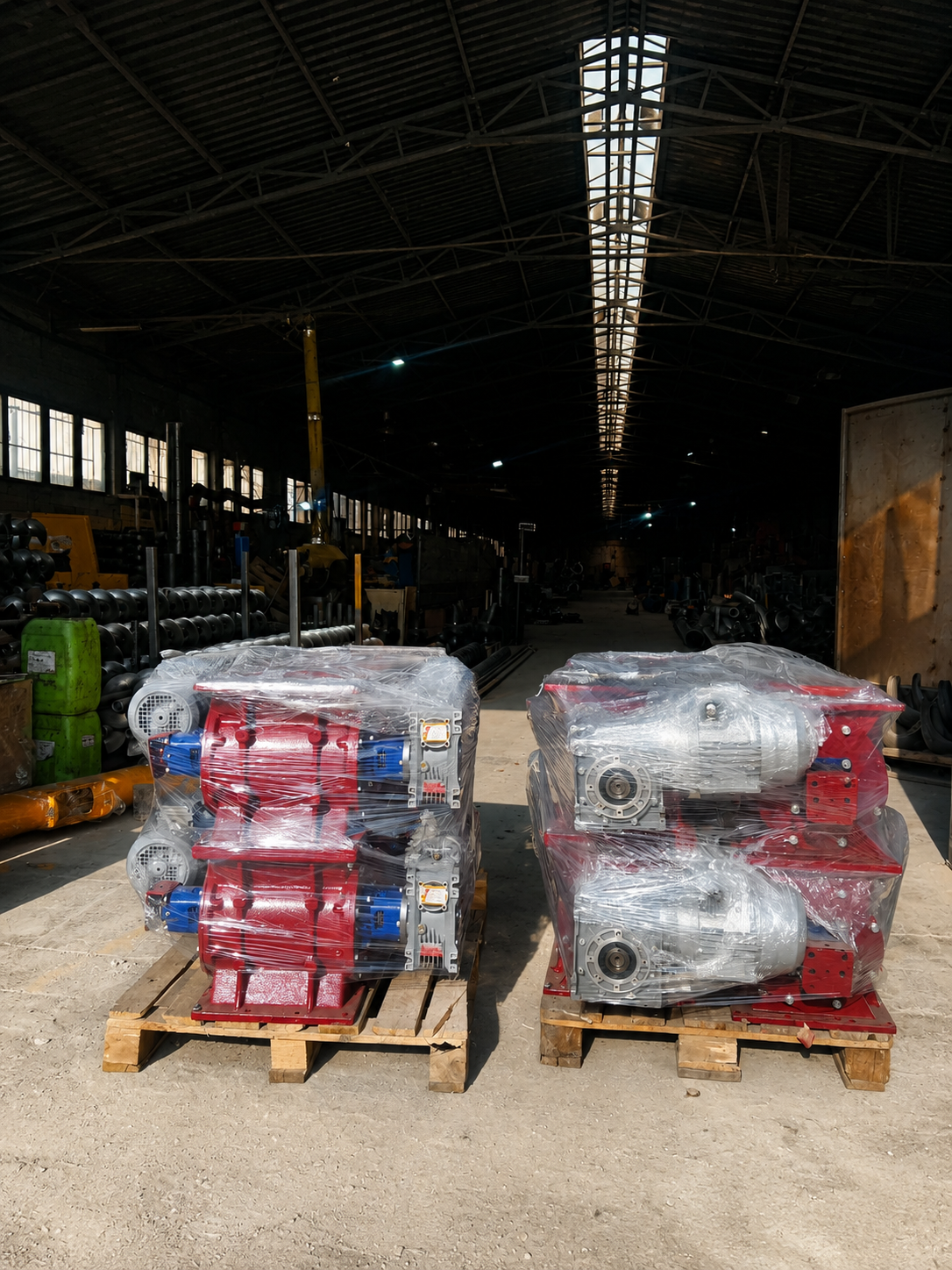
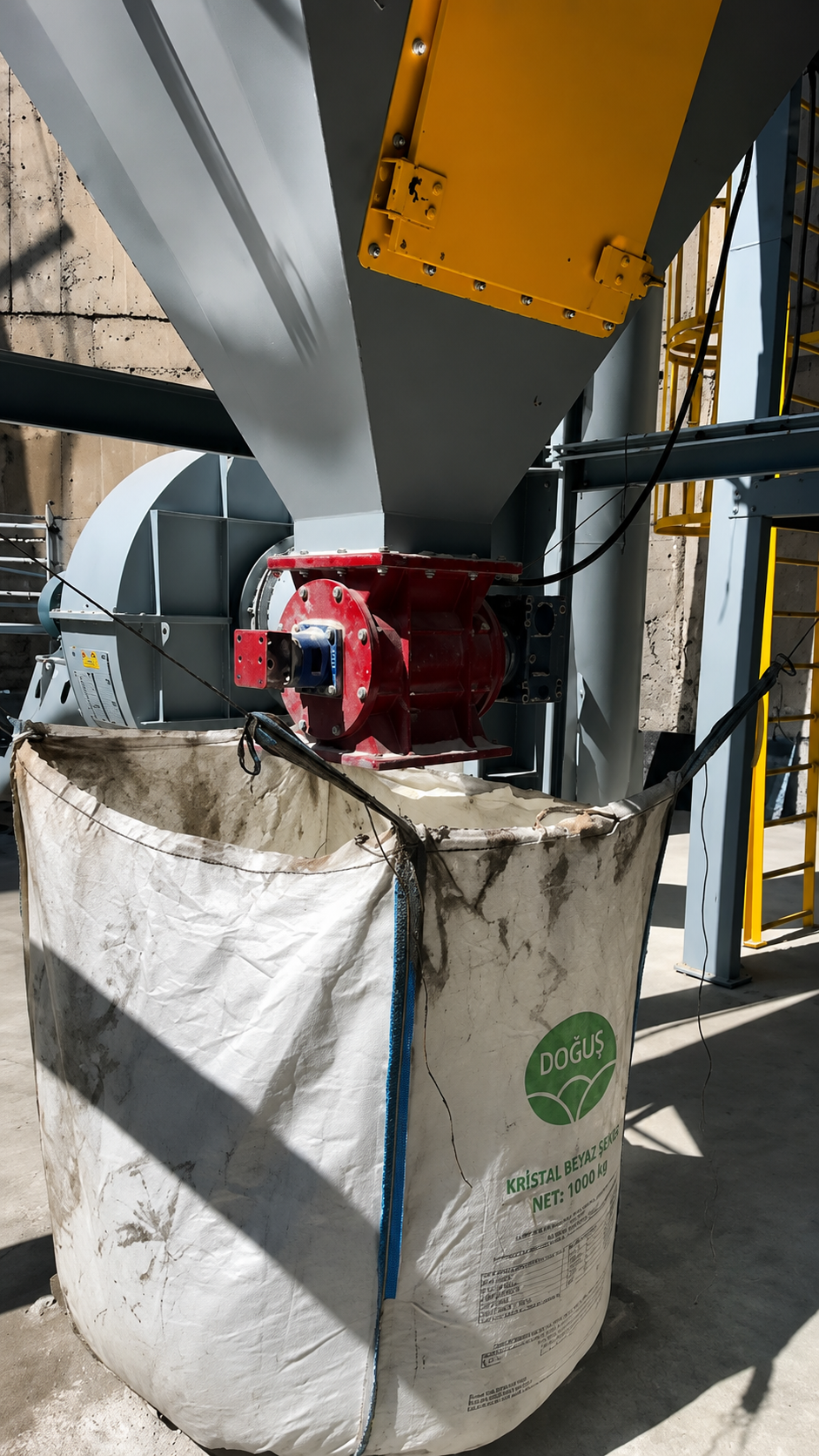
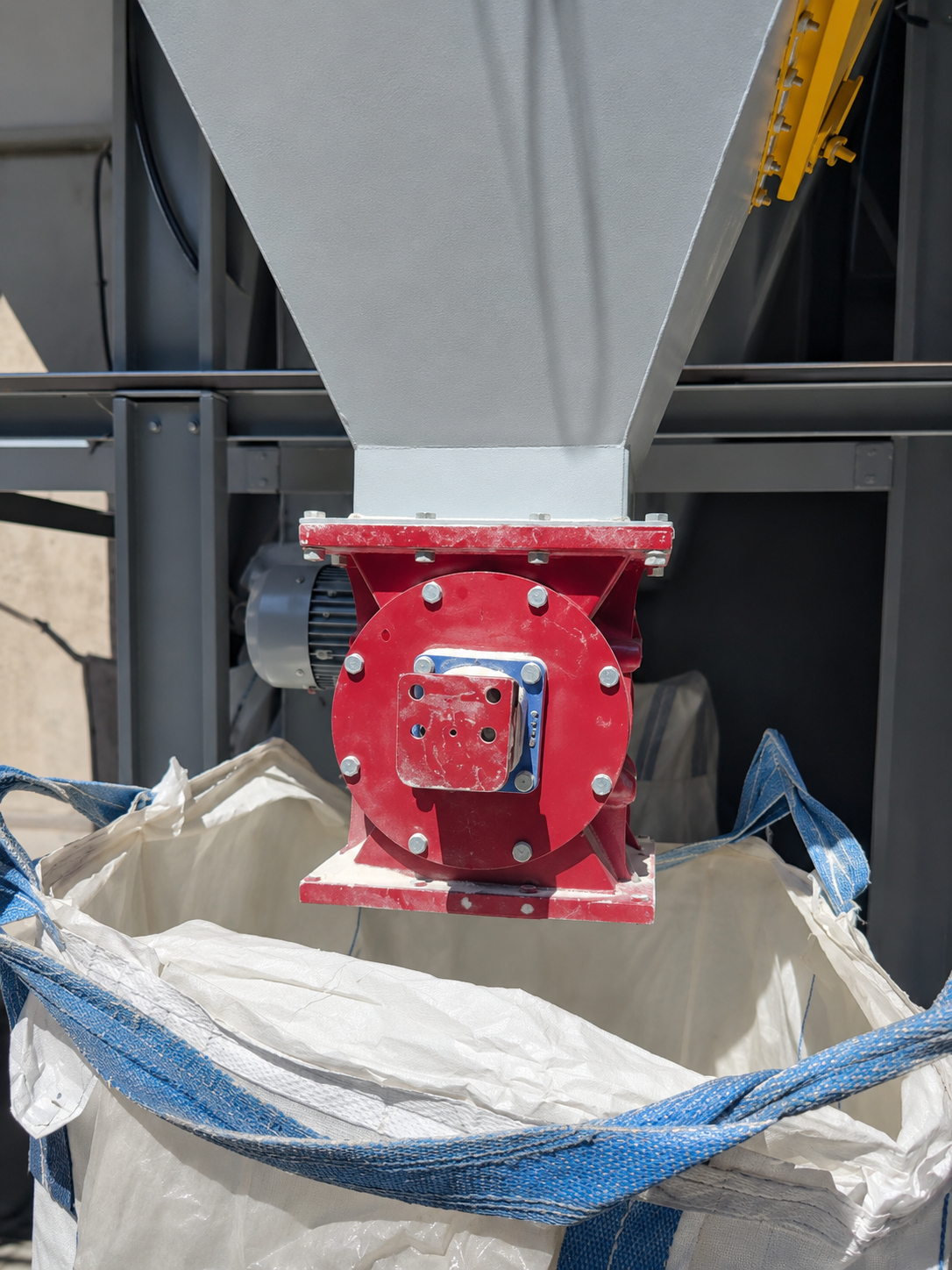
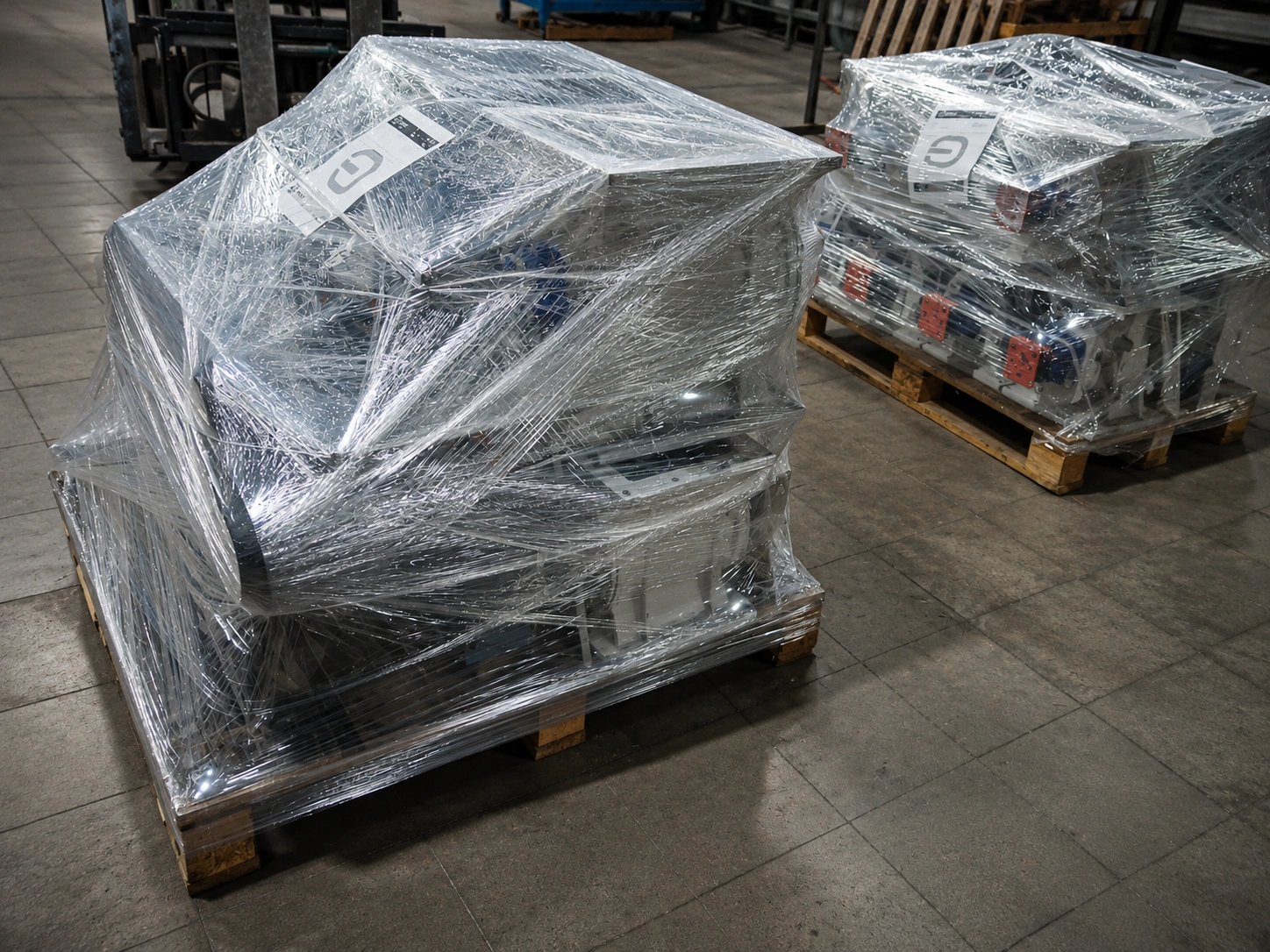
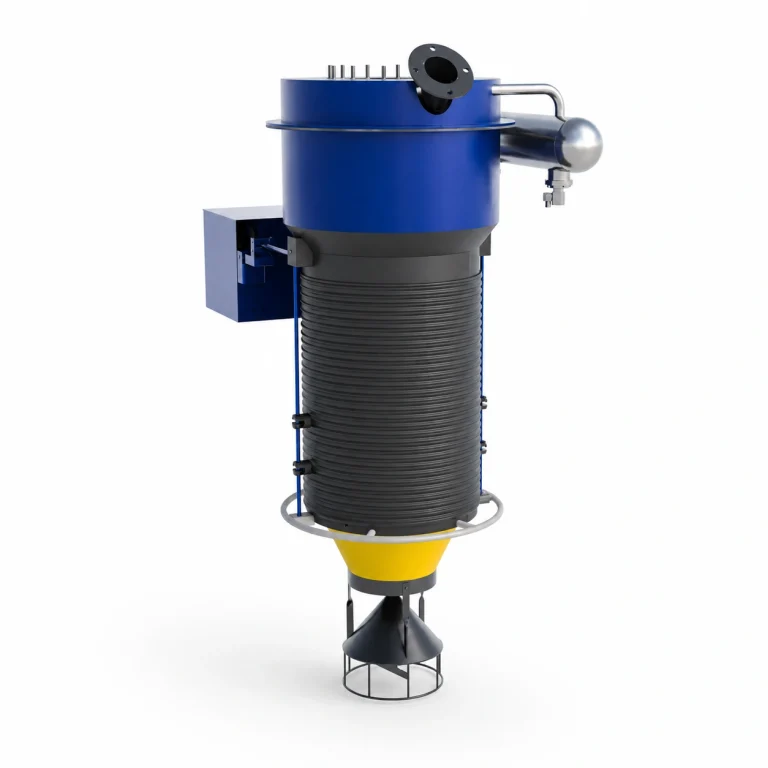
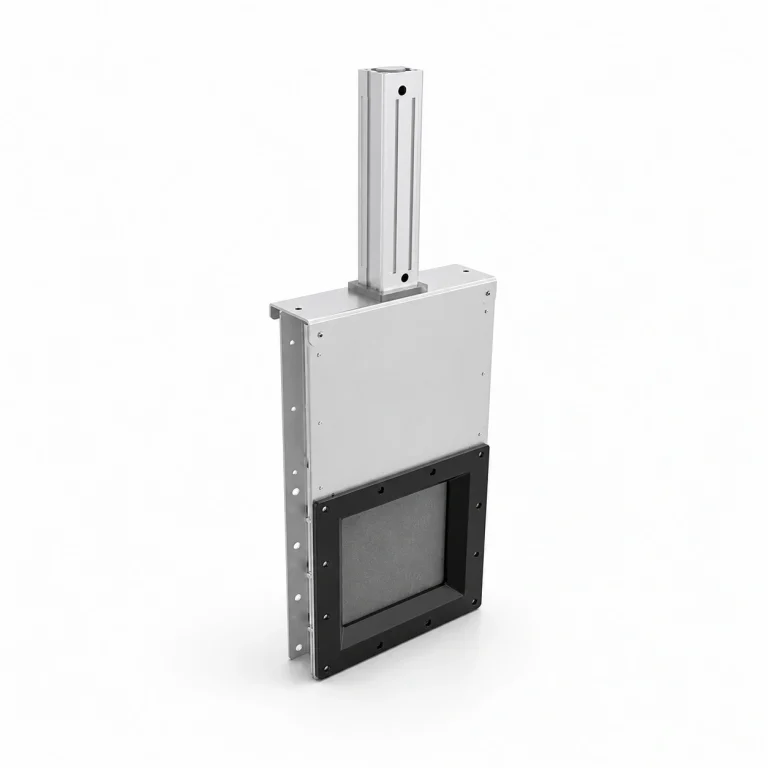
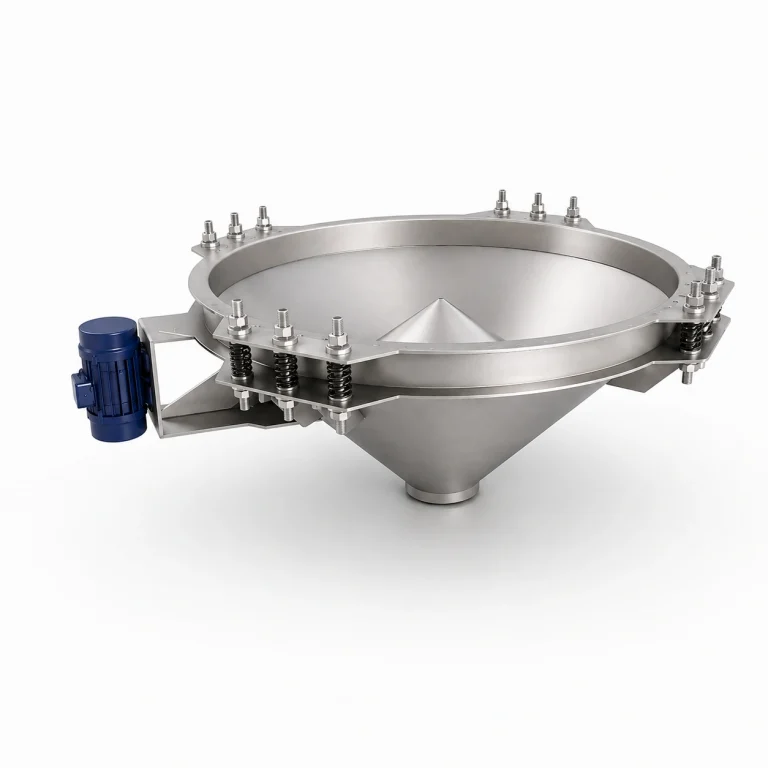
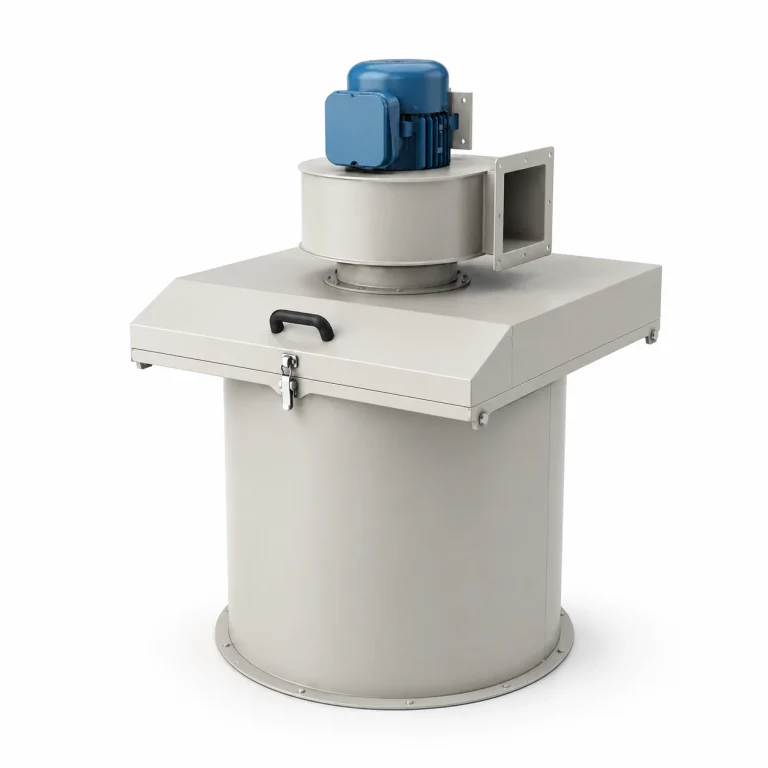
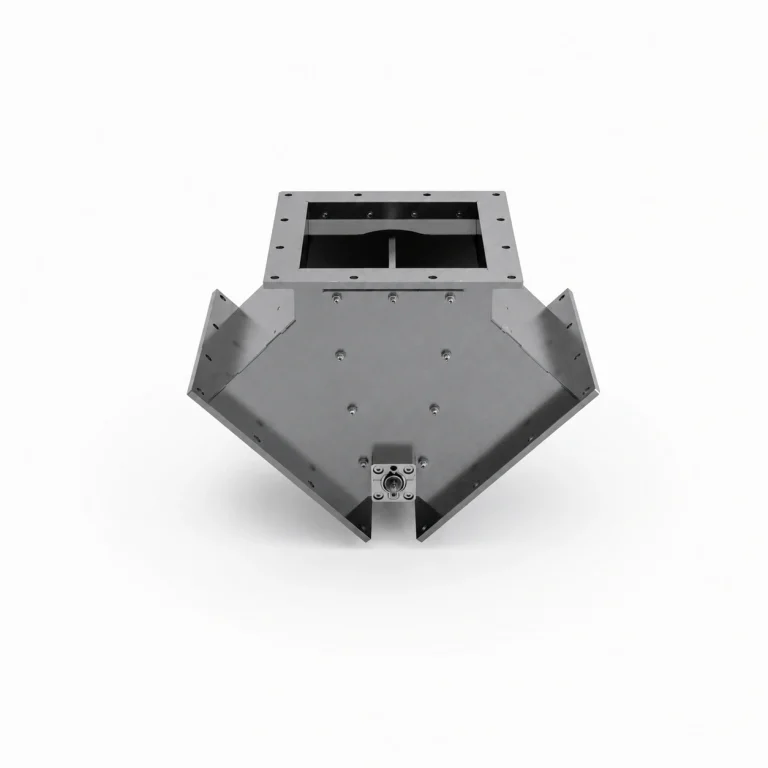
eQUIP manufactures rotary valves for controlled discharge, feeding and dosing of powders, granules and bulk solids in industrial bulk material handling systems. Also known as rotary airlock feeders, these valves are commonly used under silos, hoppers, dust collectors, bag filters and process equipment where stable material flow and dust-tight operation are required.
A rotary valve helps regulate material flow between two process points while maintaining a controlled discharge rate. As the rotor turns inside the valve body, material fills the rotor pockets and is discharged in a steady and repeatable way. This makes the equipment suitable for silo discharge, powder dosing, filter discharge and feeding applications.
Depending on the application, the valve can operate as a rotary airlock valve, rotary feeder or star feeder for dry bulk materials. Body material, rotor type, sealing arrangement, drive unit, inlet and outlet dimensions, surface treatment and wear protection can be adapted according to project requirements.
What It Does
A rotary valve transfers bulk material from an upper equipment outlet to a lower process point in a controlled and continuous way. It is typically installed below silos, hoppers, filters, dust collectors or process equipment to discharge material at a stable rate.
The rotating pocketed rotor helps control the flow of powders, granules and bulk solids. In airlock applications, the valve also helps reduce uncontrolled air leakage between different pressure zones, especially in pneumatic conveying and dust collection systems.
Key Benefits
- Controlled discharge of powders, granules and bulk solids
- Stable feeding from silos, hoppers, filters and process equipment
- Suitable for cement, fly ash, lime, minerals, food powders and similar materials
- Can operate as a rotary valve, rotary feeder or rotary airlock valve
- Helps reduce uncontrolled material flow and dust leakage
- Supports airlock function in pneumatic conveying and filter discharge systems
- Configurable rotor design, body material and sealing arrangement
- Compatible with screw conveyors, bagging systems and transfer equipment
- Service-friendly construction for inspection and maintenance
- Optional wear-resistant and stainless steel configurations
Technical Flexibility
The design of a rotary valve depends on the material type, bulk density, particle size, flow rate, pressure conditions, temperature, abrasion level and required dosing accuracy. eQUIP can configure the valve body, rotor type, pocket volume, inlet and outlet dimensions, drive unit, sealing system and material selection according to the project.
For abrasive powders such as cement, fly ash or mineral materials, wear-resistant construction can be considered. For food, chemical or corrosion-sensitive applications, stainless steel or special surface finishes may be used according to project requirements.
Optional Configurations
- Carbon steel or stainless steel body
- Open-end or closed-end rotor options
- Fixed or adjustable rotor clearances
- Direct drive or chain drive arrangement
- Gearmotor with suitable speed selection
- Square or round inlet and outlet connections
- Wear-resistant liners or coatings
- Air purge sealing options
- ATEX-ready configurations on request
- Surface treatment and industrial paint system
Applications
- Silo discharge points
- Hopper and bin outlets
- Dust collector and bag filter discharge
- Pneumatic conveying systems
- Screw conveyor feeding points
- Weighing and dosing systems
- Bagging and packing lines
- Cement, fly ash, lime and mineral powder handling
- Granules, food powders and dry bulk solids
FAQ
What is a rotary valve?
A rotary valve is a bulk material handling component used to discharge, feed or dose powders and granules in a controlled way. It uses a rotating pocketed rotor to move material from the inlet to the outlet.
Is a rotary valve the same as a rotary airlock feeder?
In many bulk material handling applications, the terms are closely related. A rotary valve controls material discharge, while a rotary airlock feeder also helps reduce air leakage between different pressure zones, especially in pneumatic conveying or dust collection systems.
Where is a rotary valve used?
Rotary valves are commonly used under silos, hoppers, dust collectors, bag filters, mixers, screw conveyors, weighing systems and pneumatic conveying lines.
Can a rotary valve be used for cement and fly ash?
Yes. Rotary valves can be used for cement, fly ash, lime, mineral powders and similar dry bulk materials. For abrasive materials, wear-resistant construction or suitable rotor and body materials may be recommended.
What is the difference between a rotary valve and a rotary actuator?
A rotary valve is used to discharge or dose bulk materials such as powders and granules. A rotary actuator is a drive or motion-control component used to rotate another mechanism. They are different products.
How is rotary valve capacity selected?
Capacity depends on rotor diameter, rotor length, pocket volume, rotation speed, filling efficiency, material density and flow characteristics. The correct valve size should be selected according to the required throughput and material behavior.
What affects rotary valve price?
The price depends on valve size, body material, rotor design, sealing type, drive unit, surface treatment, wear protection, stainless steel requirements and project-specific operating conditions.