Follow the dust through the complete task
Observe where dust appears when the sack is opened, emptied and removed. Shaking or folding an empty sack can release remaining powder even after the main discharge has finished. Include waste-bag handling in the design, rather than leaving it beside the station.
Record sack weight, bags per hour, powder behaviour, working height and the way sacks reach the operator. These details affect both extraction and handling.
Capture at the opening
An extraction hood should draw dust away from the breathing zone while allowing the operator to work. Room draughts, open doors and a large unprotected opening can undermine capture. An enclosed access arrangement may be needed for materials demanding greater containment.
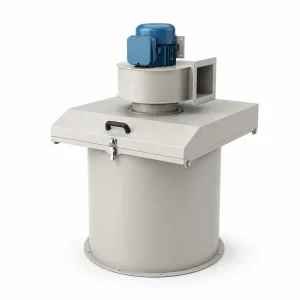
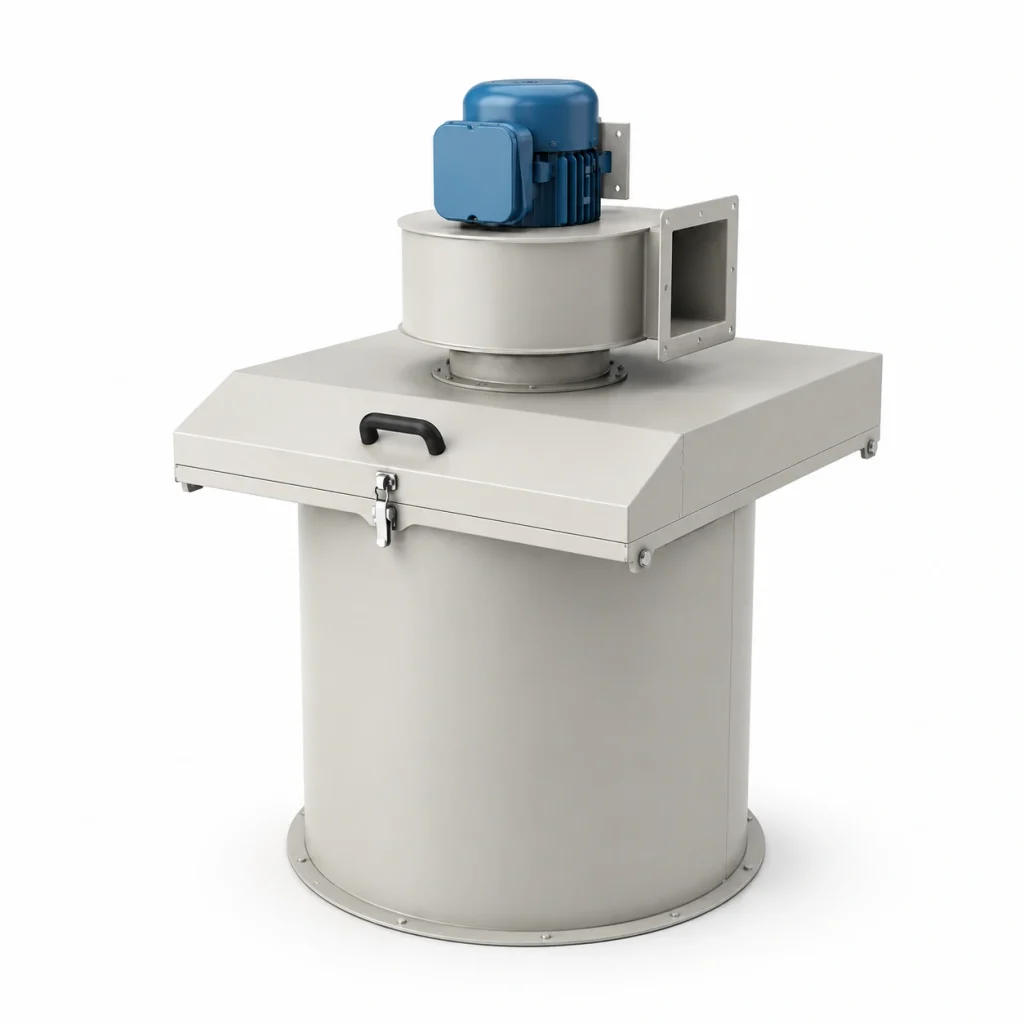
A silo-top filter is not automatically a complete sack-tipping extraction system. The hood, airflow, fan pressure, ducts, filter and collected-dust discharge must be matched. A larger filter alone cannot correct a poorly positioned opening.
Connect the hopper to the process
The receiving hopper needs enough usable space for the tipping cycle and a controlled outlet to the conveyor or doser. Product build-up can reduce this space. If material falls into a downstream vessel, the displaced air also needs an appropriate path.
For food, consider hygiene, allergens and sack fragments. For chemicals, assess operator exposure and material compatibility. For combustible powders, include the assessed dust hazards in the equipment specification.
For a quote
What a useful trial should demonstrate
- Observe opening, emptying and waste-bag removal under realistic production conditions.
- Check capture with the normal doors and nearby ventilation operating.
- Confirm hopper evacuation, cleaning access and changeover procedure.
- Record material, sack format, bag rate and any visible dust escape.
Do not use compressed air to blow dust off clothing or the station. Choose cleaning and exposure controls for the actual material and workplace.
Send the material data and a photograph or layout of the installation so we can define the equipment and connection requirements.